Sign up for the Family Tree Newsletter Plus, you’ll receive our 10 Essential Genealogy Research Forms PDF as a special thank you!
Get Your Free Genealogy Forms
"*" indicates required fields
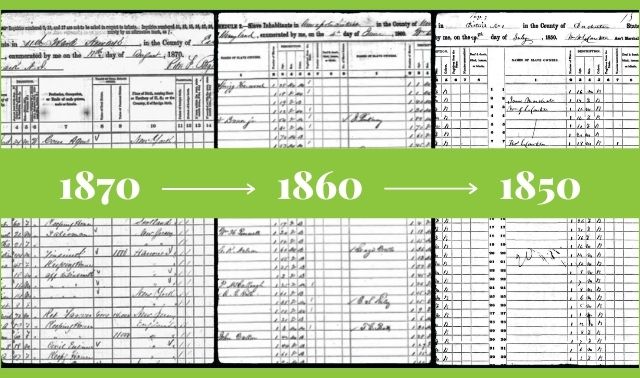
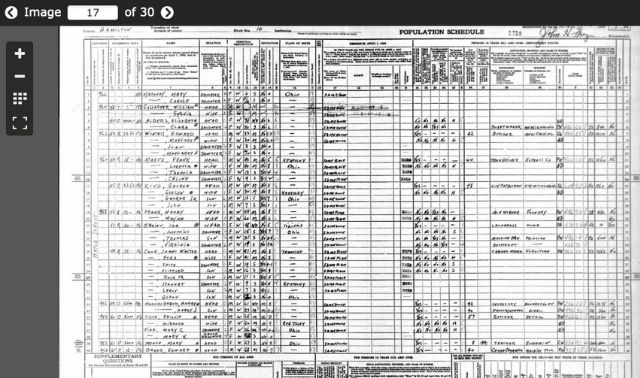
Working backwards in the census can be an effective method for tracing your enslaved ancestors. The 1870 census was the the first census to count all individuals as “whole persons,” as the 14th Amendment abolished the three-fifths counting rule in 1868. So in order to use this method, you’ll need to trace your family back to the 1870 census first.
Begin by reviewing a family group sheet of the post-Civil War family members you want to focus on. You’ll need a list of their given names and ages to determine which family members might have been born as slaves and determine the slaveholder.
If you know the slaveholding family’s name, you can start researching that family. If not, you can start with the presumption that the family kept its former or most recent slaveholder’s surname, but you should be alert for clues that imply otherwise.
1. Subtract 10 years from the ages.
Using your list of ancestral family members from the 1870 census, subtract 10 years from your subjects’ 1870 ages to estimate their ages in 1860. Isolate the names and ages of those who were living in 1860 for the next steps.
2. Look at the neighborhood where your ancestors lived in 1870 for white families with the same surname.
Make your search countywide, or even statewide, if your ancestors’ name was unique. Create a list of same-surname candidates for the slaveholding family. Include possible spelling variations — Harget(t), Hargit(t), Horgett, Hargot, Horgatt and so on. Consider going back as far as the 1850 census, or that county’s marriage and deed records, to look for white families of that surname.
3. Determine which of the white families on your list owned slaves in 1860 by looking at that county’s 1860 slave schedule.
You might be able to eliminate families whose names aren’t there, but also check the 1850 slave schedules before you do. You can search the 1850 and 1860 slave schedules on FamilySearch and Ancestry.
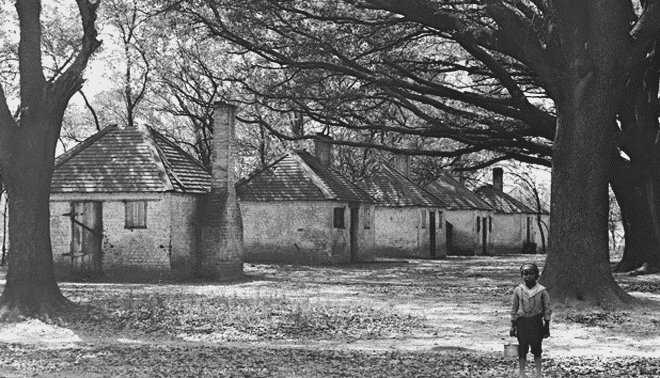

4. Compare the ages of your ancestor’s family group in 1860 with slaves’ ages in households in the slave schedule.
Does a group of enslaved people in any household match the list of your family members’ sexes and ages? Remember that the slaves were grouped under the name of the slaveholder and identified by sex, color and age — rarely by name. Your ancestors might have been a family prior to the war, but the parents might have lived on neighboring farms, so search for the mother and children together.
5. Prioritize the slaveholding candidates according to what you find in the slave schedules.
Likely candidates
Your ancestral family members who fall within the ages listed in their 1860 slave schedules.
Less likely candidates
Your ancestral family members and those listed on the 1860 schedule whose ages don’t appear to coincide.
Least likely candidates
Those candidates not listed in either the 1860 or 1850 schedules. Some slaveholders might have been omitted, but the schedules are probably the most complete resource available.
6. Repeat this for the 1850 slave schedule, especially if your ancestors’ ages indicate they were a family before 1850.
Sometimes, people were accidentally omitted from both general population and slave schedules.
7. If your search produces enough evidence to suggest further investigation of a particular candidate, start researching that white family.
Study the leading candidate(s) in the county records to determine if your family is included in those records.
8. Don’t try to make your ancestor fit into an obviously unlikely match.
If these steps above don’t produce the name of the slaveholder, consider these factors:
- Your family might have moved from its 1860 home after the war to a neighboring county or town. Although some freed men and women moved away after the war, often they remained on the same land for many years.
- The slaveholding family might have moved away after the war. Pre-war county records might reveal their identity.
If you don’t find candidates of the same surname as your family, consider slaveholders from the 1860 slave schedules who lived near your family in 1870. Review others who owned slaves in your focus county in 1860. Your ancestors might have lived on a plantation near the same-surname white family.
A version of this article appeared in the December 2002 issue of Family Tree Magazine.
Related Reads

ADVERTISEMENT