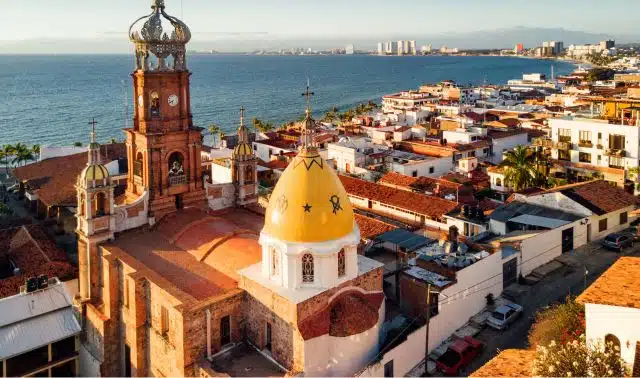

As I have pieced together my Colombian family tree, the internet has granted me so many valuable resources. I can easily and freely access far-flung libraries with a wealth of scholarly work and archives full of priceless primary sources on my laptop. Here are some techniques I figured out over the years to break through difficult brick walls to and steadily find answers about my Latin American past.
1. Collect Stories
One of the sad truths about genealogy is that the records will always be there, especially if they’ve been digitized, but our loved ones will pass and memories will fade. While documents may uncover our ancestors’ actions, family stories help reveal the motivations for why our ancestors made certain decisions – but that information often disappears along with living memory.
Immigration and migration stories are a classic example. Passenger manifests, census records, or directories can help establish the timeline of your ancestors’ movement, but a first-hand or second-hand account of why someone migrated will be a priceless family heirloom. You can film your relatives’ stories on your camera, and not only preserve the manner in which they tell their stories, but also preserve further clues that could become clear at a later time.
2. Find Relatives Through Social Media
You can try searching for relatives with your own social media networks. Your older relatives are more likely to be linked with extended family, or you can reach out to cousins who were raised by older generations and may have heard more family lore. Older relatives may also post family photos of extended relatives and ancestors – I found a 3rd-great-grandfather’s photo this way.
On Facebook alone, there are a myriad of public and private groups dedicated to countries, regions, or even towns of interest, and frequently group members will post photos or stories about older relatives or neighbors. There may also be focused genealogy groups on your area of interest where researchers post findings or may even offer to help you.
3. Acquaint Yourself with the Spanish Language
It’s important to learn Spanish so that you can understand documents for yourself, but often genealogical sources contain antiquated vocabulary, or legal and technical terms that are not in common use. Google Translate has a powerful “camera” function that lets you hold your phone in front of a printing page to translate in real-time. You can also upload and translate screenshots, text in images, and even smaller PDFs or documents through Google Translate.
Artificial intelligence sites like ChatGPT and Claude are also handy with translation. If you give extra context for the text, such as where and when the text was made, the AI site might pick up on more specialized terms. In one astounding example, I thought an 18th-century Colombian will mentioned “two chairs upholstered in guadamari” but the last word did not turn up in Google. I asked AI for another possible word that starts with “guadam-,” and I got the correct answer of “guadamecí,” a kind of decorative embossed leather. Of course, all AI output needs to be double-checked.
4. Find Locations of Interest
Narrow down your geographic area and time period of interest as much as possible. Spanish first and last names are often extremely common – you don’t want to search for a “José Antonio Gómez” in all 19th-century Mexican records! In my case, I reached out to a distant cousin on Facebook to learn where my great-grandfather was born – the crucial village where I found other records of his immediate family.
Other records that could show an original overseas residence or birthplace include obituaries, petitions for naturalization, or immigration records. Latin American marriage and death records could indicate someone as “natural de” (native of) a specific place.
5. Visit FamilySearch.org
Once you nail down your location and era of interest, you can explore FamilySearch.org, a warehouse of genealogical records compiled by the Church of Jesus Christ of Latter-Day Saints. As of October 2026, the website had 5.9 billion digitized records with 16.9 billion searchable names – and it’s likely your ancestors are among them!
You can search the FamilySearch Research Wiki for country- and region-specific advice on records and their availability. The FamilySearch Catalog also shows what records are available for a particular town or the surrounding state, province, or department, depending on the country.
FamilySearch hosts incredible indexing efforts fueled by both human volunteers and AI algorithms. Start on the Search page, which mostly looks at names pulled from vital records: civil and church records of births, marriages, and deaths. You can add names of spouses or relatives, as well as locations and dates to narrow down the results.
If you’re lucky, your ancestors’ birth, marriage, and death records will be indexed, but don’t worry if they’re not. Many volumes of records, especially from Catholic parishes, include handwritten or typed indexes, usually at the beginning or end. But obviously those indexing system are not standardized and sometimes are skipped over during digitalization.
Vital Records
Civil birth records or Catholic baptismal records usually include parents’ names, and baptismal records often list grandparents. Don’t skip over godparents’ names, as they could be important clues. If you see the same godparents appearing multiple times in a family’s baptisms, it’s likely they were relations of some kind.
If you’re searching for a baptismal date, some people were named after the saint or the holy occasion celebrated on the day of their baptism. My poor 4th-great-aunt, Circuncisión Rueda, received her strange name because she was baptized on January 1 – the Feast of the Circumcision of Jesus! What she thought of her name was lost to time.
From the 20th century onward, baptismal records often include handwritten notes listing who these people grew up to marry, and where and where the ceremony was. In turn, marriage records can hint at someone’s birthplace, as people – especially women – often married in the parish where they were baptized.
Death or burial records may share names of the deceased person’s parents or spouse, and from the 20th century onward often include the name of an informant (“informante”), who may be a close relative.
Marriage Dispensations
In many small Latin American towns, cousins sometimes ended up marrying each other, after receiving a “dispensation,” or granted permission from Catholic church officials. These relationships may make you feel uncomfortable, but they will be a gold mine for your genealogy research. Check to see if the record says the “degree” that the spouses are related, referring to the number of generations they are removed from their common ancestor. For example, if they are “segundo grado mixto con tercero grado” (second degree mixed with third degree), one spouse was a grandchild of a common ancestor, and the other spouse was a great-grandchild.
If the parish has surviving marriage dispensation records (“dispensas matrimoniales”) or related testimonies (“expendientes matrimoniales”), they may explain exactly how the spouses were related – common ancestor X had Y, who had Z, etc. Sometimes an accompanying handwritten family tree may clearly explain the relationship.
Another trend in smaller towns was having siblings from one family marry siblings from another family, and one sibling’s record could have more details than another sibling’s record.
Full-Text Search
If FamilySearch is the treasure chest, then its Full-Text Search is the key. Accessible from the Search drop-down menu at the top, Full-Text Search uses AI to look through records processed with Optical Character Recognition (OCR) software, which turns images of handwritten, typed, or printed words into machine-readable text. The “Simple Search” lets you type an ancestor’s details, while “Advanced Search” lets users narrow results by location, a range of years, and even type of record.
Notarized Records in Full-Text Search
Beside vital records, Full-Text Search also searches through “protocolos,” or notarized records written by town officials regarding business deals, property sales, wills and probate cases, legal guardianship, marriage contracts, and even court cases. These records often provide many more details about ancestors than can be gleaned from church records.
Property sales can be especially helpful, since houses and land often passed from one generation to the next. I searched for a brick wall ancestor – Francisca Berbeo married to Salvador de Rueda – and the first page of Full-Text Search results included a record of Francisca selling land inherited from her father, Andrés Berbeo.
Probate cases and wills are also helpful for listing relatives, and wills from the colonial era often included parents’ names and hometowns, listed children both living and predeceased and sometimes included grandchildren and more extended relatives. Other colonial-era records with surprising family information include “capellanías” (chaplaincy endowments), in which a person donated money or assets to support a priest to say prayers on behalf of the donor and family. There were also genealogies drawn up by colonial officials, in order to prove the “nobility” or family military contributions of a petitioner seeking land grants or cushy government or military positions.
Volumes of protocolos often had other documents inserted into them, such as obituaries or newspaper articles, which Full-Text Search can uncover. I’ve found two Colombian villages’ founding charters – from the 1770s and 1790s – inserted and transcribed in 1920s records. Town clerks’ efforts to preserve local history a century ago paid off through digitalization a century later!
Full-Text Search & AI
If you click on a Full-Text Search result, you will see an automated transcript to the right of the original record. There are toggles that can automatically translate or summarize those transcripts. Even when the transcript is garbled, you can copy the text into an AI site and receive mostly accurate transcriptions, translations, and summaries. AI always needs double-checking, since its predictive text functions will sometimes misinterpret words. For example, a Flemish person named “Portier” mentioned in a Spanish record get misread as “Cortés,” with AI thinking it was the more likely (but incorrect) word.
FamilySearch Family Tree
FamilySearch has many dedicated users who may help give you clues. Choose “Family Tree” from the top Search drop-down menu, and you can search through 1.9 billion names and 4.2 billion attached records (as of October 2026).
I have had the pleasure of discovering multiple ancestors’ baptismal, marriage, and death records attached to their Family Tree profiles. However, you need to be extremely careful and double-check the records, to make sure they are referring to the right people.
Newspapers
Digitized newspapers can provide obituaries and other clues about families. The terrific directory Newspaper Finder lets users see which newspapers from which years have been digitized and where they can be found.
Google Newspaper Archive, which is an inactive but still accessible Google database, provides historical issues from more than 2,000 global newspapers, including “El Tiempo,” the main newspaper of Bogota, Colombia. Searching for my last name in that site, I was shocked to find my great-grandmother’s obituary.
FamilySearch Centers, which are run by the LDS Church, provide free access to Newspaper Archive. Sites like Newspapers.com and OldNews.com also provide free previews of articles, which was how I found one of my favorite genealogy finds: the newspaper notice of my Dad’s naturalization ceremony, which I attended at the tender age of 7 weeks.
Libraries, Archives
Google Books, much like its sister search engines, can locate keywords or names of interest among digitized texts. Older works that are no longer under copyright can be viewed in entirety, while newer works are often shown in “snippet” mode, showing highlighted keywords. The Internet Archive, similar to Google Books, also searches published texts for keywords, and has broader access to printed ephemera like directories and pamphlets.
Latin American & Caribbean Digital Primary Resources is a database by the Seminar on the Acquisition of Latin American Library Materials (SALALM) providing links to websites of different countries’ archives. You can also search for the national archive or regional archives of a country, which often provide access to digitized records. Colombia’s Archivo General de la Nacion has the DataViva database, which lets users search documents by keywords, and the Banco de la Republica’s Hemeroteca digital histórica provides access to other scanned documents.
The Slave Societies Digital Archive, run by researchers in Vanderbilt University, focuses on primary sources about Black Latin Americans in major slave-owning regions. They mainly focus on church registers were enslaved Africans married and baptized children and notarized records which were rampant with slave sales during the colonial era.
WorldCat compiles global library catalogs and JSTOR provides free access to up to 100 academic articles monthly. While you may or may not find information about your direct ancestors, it is interesting to read about the broader history of their regions, especially regarding economics that impacted their lives. Footnotes can also help lead to other sources.
You may even find your family in a published genealogy, but as with all compiled resources, you need to double-check what you find. Imperial Spain, with its pretensions and Inquisition, was full of snobs claiming distant descent from medieval kings and even Roman generals. Hopefully you will be more discerning in your search.
Related Reads