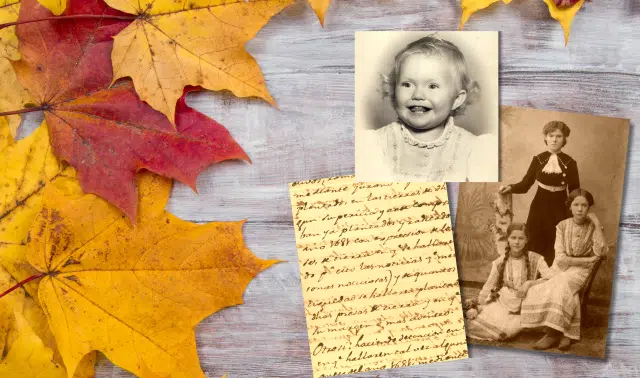
Signatures can be precious mementos of your loved ones—and crucial clues as you research records. In addition to using handwriting in research, you can also display your ancestors’ signatures in a way that shares and celebrates your heritage. These easy signature projects will help you display your genealogy.
1. Frame a Record

Create simple artwork by printing and framing records that include your ancestor’s signature. Display the frame in your home, or gift it to a family member.
2. Overlay a Signature on a Photo

Use photo-editing software to place an ancestor’s signature over a picture of him. Free websites such as Canva work nicely, as do more sophisticated photo-restoration software like Adobe Lightroom or Photoshop. This creates a meaningful connection between your newfound record and a cherished photograph.
3. Add to a Scrapbook or Photo Album
Print out a few signatures that you’ve discovered and paste them alongside photographs, printouts or other memorabilia in a collection.


4. Attach to Online Family Trees
Like other historical images, signatures make great additions to online family trees and software programs—particularly in lieu of photos of your ancestor himself. “I create these lovely signature silhouettes for ancestors that I do not have photos for,” says Amberly Beck, who writes about family history on her blog The Genealogy Girl. “I share them with my nongenealogist family members in a special private photo album on Facebook, [and] I also add them to FamilySearch and my Ancestry tree so other family members can find and enjoy them.”

5. Create a Signature Pedigree Chart

Instead of typing or hand-writing your ancestor’s name, place her signature on a family tree. You can order pedigree surname charts on Etsy.
These can make great gifts for genealogists and nongenealogists alike. Beck received one from her sister for Christmas. “When I opened the gift, I was overwhelmed! I know each of those people so well from my years of work researching every detail of their lives and preserving their photos, letters and other treasures,” she says. “Seeing all of those signatures arranged as a pedigree was emotional and deeply meaningful.”
Related Reads


A version of this article appeared in the May/June 2020 issue of Family Tree Magazine. Last updated: July 2025