Czech and Slovak Immigration Patterns

By Lisa A. Alzo Premium
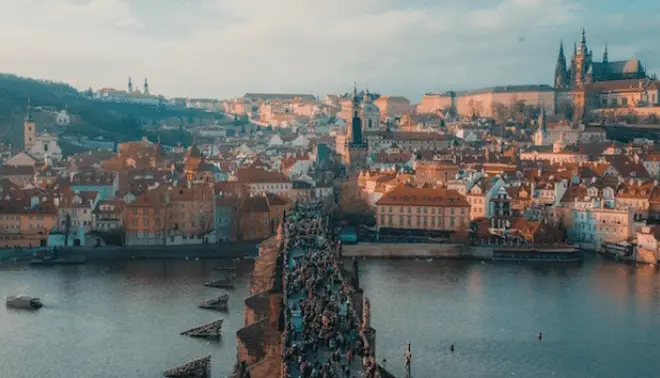
A panoramic view of Prague’s Old Town Square featuring the Church of Our Lady before Týn with Gothic spires, colorful historic buildings, and red-tiled rooftops under a partly cloudy sky.
Prague, Czech Republic. Courtesy of Scott Biales, Getty Images.

Your quest to trace your roots to the old country begins with identifying and documenting the immigrant generation. The majority of Czech and Slovak immigrants arrived before the 20th-century political upheavals. That includes approximately 400,000 Czechs and some 620,000 Slovaks who flocked to America’s shores between 1850 and 1914—some sought better economic and social conditions; others wanted to avoid political persecution or conscription into the Austrian army.

Pre-Civil War Czech immigrants were farmers who settled in Iowa, Illinois, Texas, Wisconsin, Nebraska and the Dakotas; those who arrived after the Civil War opted for larger industrial or mining areas. Slovak immigrants began arriving en masse in the 1880s and sought employment in American factories, mines and mills in cities such as Chicago, Cleveland and Pittsburgh.

Researching your Czech ancestry can be difficult, especially if you aren’t familiar with the language. Keep this glossary of common genealogy terms handy as you research to save both time and frustration.

Not all Czech and Slovak immigrants intended to settle in the United States permanently—some planned to stay only until they could earn enough money to purchase land back home. These “birds of passage” sometimes returned several times before settling in America for good. So be sure to look for immigrant ancestors on multiple passenger arrival and departure lists.

Like many ethnic groups, Czechs and Slovaks also followed the pattern of “chain migration”: immigrants often set out for America to join relatives or old-country neighbors who were already there. In particular, a husband might come over first, then send for his wife and children later, or a family might “sponsor” the trips of aunts, uncles and cousins as they could afford it. For that reason, you should take note of your ancestors’ neighbors in census, church, immigration and tax records here—the families might have a connection back home.

Finding Czech and Slovak Immigrants

You’ll need to consult US records, family papers and finding aids such as Leo Baca’s Czech Immigration Passenger Lists (check your library) to pinpoint your family’s date and port of immigration. The National Archives and Records Administration (NARA) keeps passenger arrival lists for US ports; you can also find them on Ancestry.com and FamilySearch.

Searching for immigrant ancestors? This article offers tips on tracking down passenger lists to find when and where our relatives immigrated to the US.

Search the Statue of Liberty-Ellis Island Foundation’s massive database for ancestors who entered through the Port of New York between 1892 and 1924, and for passengers who entered at Castle Garden (Ellis Island’s predecessor).

Stephen Morse’s Ellis Island search forms and Other Ports of Immigration let you comb the official database of Ellis Island, as well as those on Ancestry.com and FamilySearch, for a surname or town that “sounds like” your ancestors’.

Some US-bound Czechs and Slovaks came through Canada, so if you can’t find evidence of your ancestors arriving through a US port, check border-crossing records. The United States began keeping them in 1895; you can view them on microfilm at NARA and its regional facilties. You can also access them online at Ancestry.com (with images) or search the index database on FamilySearch. You’ll find background on Canadian census, immigration and vital records on the Library and Archives of Canada Web site.

Your immigrant ancestors may have arrived over the Canadian or Mexican border—even crossing multiple times. Here’s how to trace them.

Because your ancestors may have traveled indirectly to their final destination, you should search records from both the port of arrival and, when available, the port of departure. Czechs and Slovaks embarked primarily from three European ports: Bremen and Hamburg, Germany, and Antwerp, Belgium.

The Hamburg State Archives has preserved that port’s passenger lists, which include the “direct” records of those sailing straight to America and the “indirect” lists of people who changed ships en route. Search both so you don’t overlook your ancestor. FamilySearch has digitized these in the “Auswandererlisten, 1850-1934” collection. These date to 1850 to 1934. You can also find them in Ancestry.com’s “Hamburg Passenger Lists, 1850-1934” collection.

Unfortunately, few of Bremen’s and Antwerp’s passenger lists have survived. You can search what survives from the Bremen passenger lists on Passengerlists.de, a project from the Bremen City Archive. For Antwerp, only the 1855 lists are fully intact, available on FamilySearch.

Related Reads

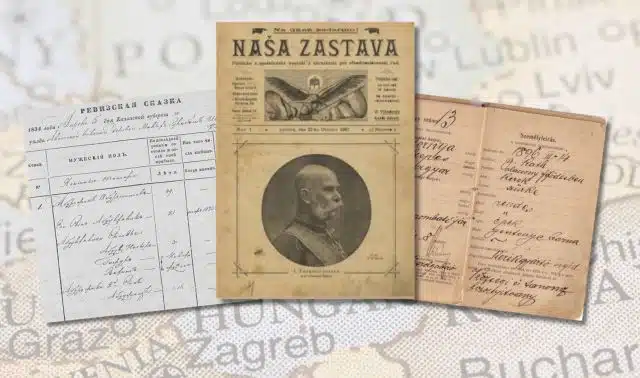
Put your Eastern European ancestors on the map with this guide to Polish, Czech and Slovak geographic resources.
These sources will help you pinpoint an immigrant ancestor’s Old World town or village of origin.
Find your Eastern European roots—Russian, Polish, Ukrainian and more—in these key documents, some of which you can find online.

A version of this article was posted online in June 2018. Last updated: October 2025

Unlock Your Roots – One Free Account, Endless Discoveries.

Get access to family tree templates, research tools, and more.

Unlock Your Family Story!

Become a member of Family Tree and empower your genealogy research.

Standard Access

Premium Articles Only

Only $39.97/year

Plus Access

Full Access & More! Unlock everything:

Just $49.97/year