
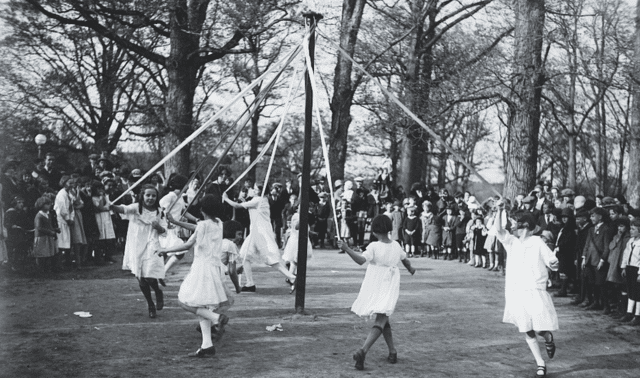
Every May brings with it the promise of fresh spring air, patches of vibrant flowers and a celebration that has endured for generations. That celebration is May Day, which is predictably celebrated every May 1st.
Did your ancestors participate in any of these customs or did they have their own traditions for the first of May?
Origins of May Day
The earliest known celebrations in May lie in pre-Christian Europe, where it marked the midpoint between the spring equinox and summer solstice. Like many early holidays, May Day was associated with agriculture.
In the Middle Ages, May Eve was celebrated across much of northern Europe with the lighting of bonfires at night. In Germanic countries, this became Walpurgis Night and in Gaelic cultures, May 1 was the celebration of Beltaine. Beltain traditions emphasized protection and renewal, often centering on ritual bonfires believed bless livestock as they moved into summer pastures. People decorated homes and gathering spaces with flowers and greenery. There is evidence of offerings, feasting and communal rites intended to ensure prosperity in the months ahead.
By the medieval period, these earlier customs came together with local traditions and evolved into more formalized May Day festivities. Communities observed the day with music, dancing and seasonal symbolism, including the maypole and the crowning of the May Queen.
Early European immigrants brought many of their May Day traditions with them to the U.S., and May Day is still celebrated across parts of the U.S. with customs varying from region to region.
May Day Traditions
1. May Day baskets
Across America in the nineteenth and twentieth centuries, people made May Day baskets. Filled with flowers and other trinkets, these baskets were hung on the doors of friends, neighbors and loved ones on May 1. In some communities, suitors would hang the baskets on the doors of the person they fancied. The tradition was popular especially with children or sweethearts.
The custom was to hang the basket on the door and run away in order to not get caught by the recipient. In some areas, if the recipient caught the giver, he or she was entitled to a kiss.
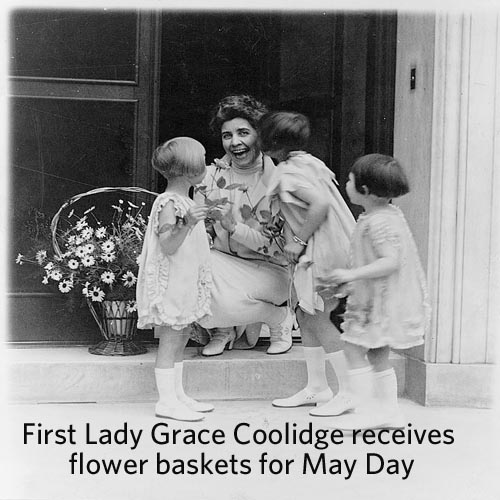
The May Day basket is still a tradition for some Americans, though it’s not well known as it once was.
2. Lily of the valley
Lily of the valley has long been considered a symbol of spring, renewal and luck, but gained popularity in France after King Charles IX was given a lily of the valley plant on 1 May 1561. He was told that it would bring him luck and as a superstitious person, determined that it would be nice to give a spring of muguet (lily of the valley) to every lady of his court each year in order to bring more luck around.
In France today, family and friends often present each other with lily of the valley of luck and prosperity in the new year, in the tradition of Charles IX.
3. May pole
Perhaps the most well-known, dancing around the May pole involves several people weaving in and out of each other with garlands to wrap the pole.
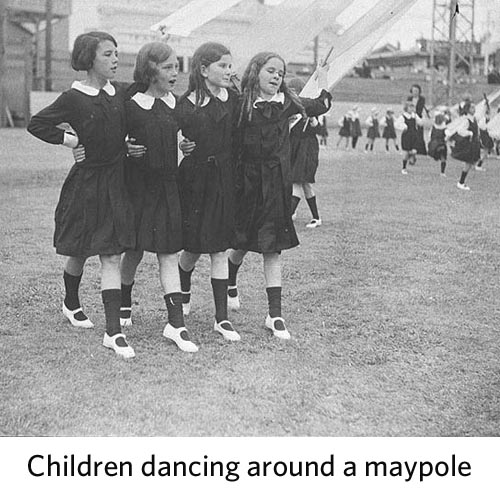
Typically erected in a village green or common area, the pole was decorated with greenery, flowers and long ribbons, around which children and young adults would dance in patterned movements.
4. Morris dancing
In Britain, this traditional folk dance can be seen performed throughout the month of May and is performed in colorful costumes and with white handkerchiefs or sticks in groups of six. Morris dancers in the U.S. have continued the English tradition of “dancing the sun up” on May Day by dancing at sunrise to welcome in the sun and the summer season.
5. Crowning the May Queen
Another tradition that comes from the British Isles is the crowning of the May Queen, when a pretty girl is crowned with flowers as the personification of May and springtime. In some Catholic churches, this was also done on a statue of Mary. The May Queen wears a white gown and her duty is to start the May Day celebrations. She is generally crowned before the dancing begins.
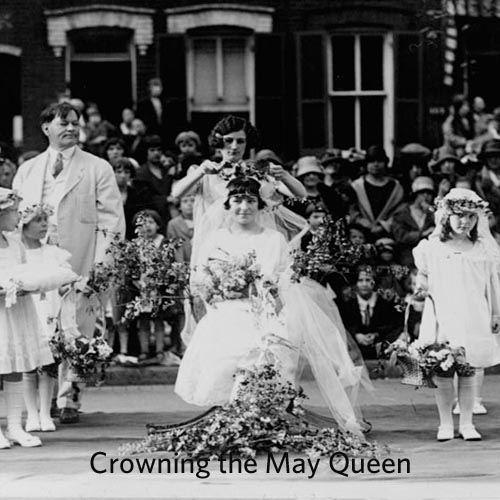
Many areas across the British Isles and the U.S. continue this tradition. In some communities, male companions are chosen to represent the consort for the May Queen. These personifications are known as Father May, King of May, May King, Garland King, Green Man or Jack in the Green.
6. Walpurgis Night
Walpurgis Night, or Witches Night, is a May Day Eve celebration (May Day being the feast of St. Walpurga), as is traditionally celebrated with dancing and bonfires in many countries, including Germany, Denmark, and Eastern Europe.
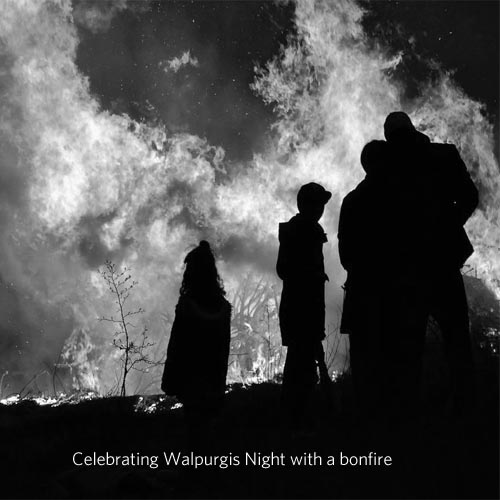
Also known as Sankt-Walpurgisnacht (Saint Walpurgis Night), the celebration is the even of the Christian feast day of Saint Walpurga, an 8th century abbess in Francia. Walpurgisnacht (Walpurgis Night) is celebrated on the night of 30 April and the day of 1 May, commemorating the canonization of Saint Walpurga (1 May 870). However, it is debated that Walpurgis Night is linked with older May Day festivals in northern Europe, which also involved lighting bonfires at night like the Gaelic festival Beltane.
Saint Walpurga was known for battling against witchcraft, and Christians prayed to God through intercession of Saint Walpurga in order to propert themselves from witchcraft. Bonfires were lit on Saint Walpurga’s Eve in order to ward off evil spirits and witches.
Variations of Walpurgis Night exist across Europe. In Finland, Walpurgis Night is one of the biggest holidays of the year and sees huge carnival-style festivals.
7. Feasting
Food and drink are, of course, vital components to May Day festivities, including Italy’s Calendimaggio, a feast to celebrate the arrival of spring. In many villages and cities across the world, large festivals are held, many of which involve food and drinks.
8. May Day parades
No holiday is complete without a parade such as this one in Union Square in 1913.
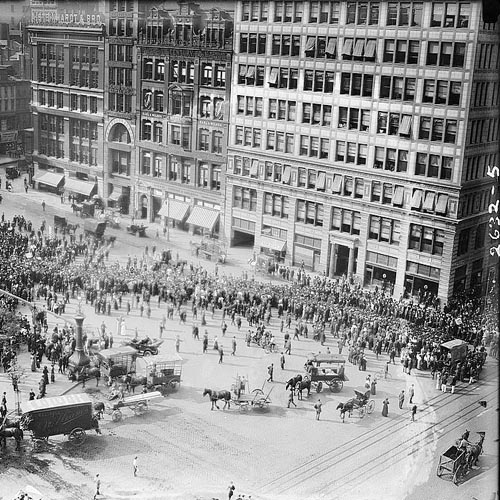
In Minneapolis, the May Day Parade and festival is held annually on the first Sunday in May. Parades are also held across the world, many of which are led by the crowned May Queen.
Author

Katharine Korte Andrew MS/LIS is a digital editor for Family Tree Magazine and professional genealogist.


