When it comes to family history, our instinct is to save everything. After all, you never know what might hold an important clue or become meaningful to a future generation. But not every object belongs in your family history collection. Knowing what not to keep is just as important as knowing what to save.
Before you start organizing boxes and filing cabinets, here are a few reminders on what not to preserve when deciding what deserves a place in your family archive:
1. Newspapers
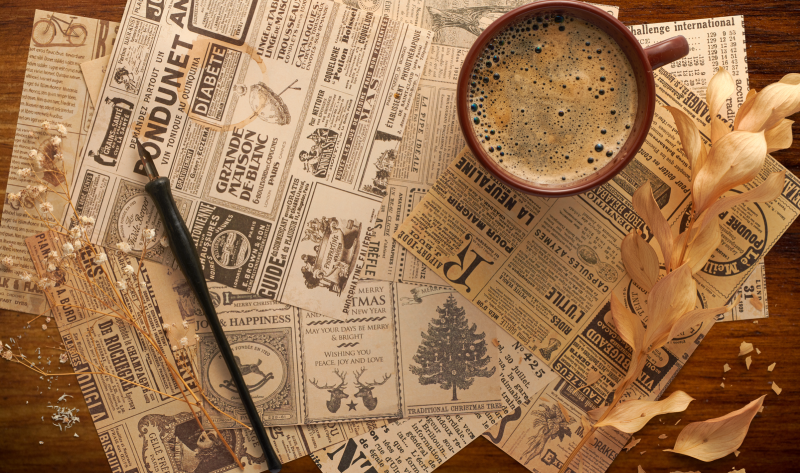
Newspapers, either clippings or whole issues (e.g., “the paper from the day you were born”), are the most-saved and most-damaging items in family collections. The high-acid wood pulp is born toxic, and the resulting acid migration will harm anything the paper touches. Ditto for anything printed on newsprint such as receipts, memos or schoolwork.


You may opt to exclude news clippings altogether. In fact, that’s the policy of many archives. Instead, photocopy clippings (etc.) on acid-free paper, then discard original newsprint. If you must save a clipping or an entire newspaper, isolate it by encapsulating it in an acid-free plastic sleeve or storing separately.
2. Food and Candy
Food and candy, including wedding cake toppers, empty candy wrappers and fancy cupcake liners, can be sentimental time bombs. Remnants of sugary frosting or creamy chocolate will attract little critters–who will munch on your other treasures along the way.
Thoroughly wash any food-related artifact and wrap it in acid-free tissue, then store in an acid-free box. Use your camera or scanner to snap a photo before throwing away paper souvenirs that held food.
3. Flowers
Flowers and flower arrangements such as bouquets and boutonnieres are fragile artifacts subject to crumbling into nothing. Pests and dust can cause further damage–unless they’re properly saved with silica gel packets in a seal preservation environment. Left in the open air of a cardboard container, any natural material attracts bugs, spiders and dust.
Ask yourself: Do you really need to save this? Or would a photo of the original fresh arrangement be enough to hold the memory?
4. Teeth, Hair and Fingernails
Baby teeth, locks of hair and fingernails are centuries-old family treasures. Properly stored, they may be a source for DNA testing in the future. But an old hairbrush in a box of documents and photos is inviting disaster.
Silverfish, in particular, are drawn to human hair and dead skin cells. Isolate human specimens in archival plastic vials, boxes or bags, then store in a larger protective archival box. Remember to label each specimen with date, donor, description and your name.
5. Mold and Mildew
Mildew and mold are not nice words in the archival vocabulary. (And, of course, you would never want to preserve them intentionally.) Once established in an archive, these are difficult to exterminate.
To prevent them, keep your archival boxes in a temperate environment (65 to 70° Fahrenheit and 40% humidity), away from any light source and in a clean pest-free location. Carefully check any materials you’re adding to your archive for mold and treat promptly.
When working with mold or mildew, be mindful of health risks and wear a protective face mask and gloves. Seek professional help for valuable items.
A version of this article was published in the September/October 2026 issue of Family Tree Magazine.
Related Reads