

You’ve found a citation for exactly the book you need. There’s just one problem: no one seems to have a copy.
Genealogists run into this often with family histories, county histories, church publications, cemetery transcriptions and other books that were never widely distributed. A title may be out of print, privately published or held by only a few libraries.
The good news is that hard-to-find doesn’t necessarily mean impossible-to-find. Locating an obscure book might take more than a basic catalog search, but there are plenty of ways to track one down, figure out where copies survive and sometimes even find one to buy.
What Makes a Book Rare or Hard to Find?
When we hear the phrase “rare book,” it is easy to picture an old leather-bound volume sitting in a special collections vault. Some rare books certainly fit that description, but plenty are difficult to find for much less dramatic reasons.
A book may have had a small print run, been distributed only within one community or organization, or been privately published by an author or family. Others were once common but have since fallen out of print. Local histories, church anniversary books, family genealogies and small society publications are especially likely to fall into this category.
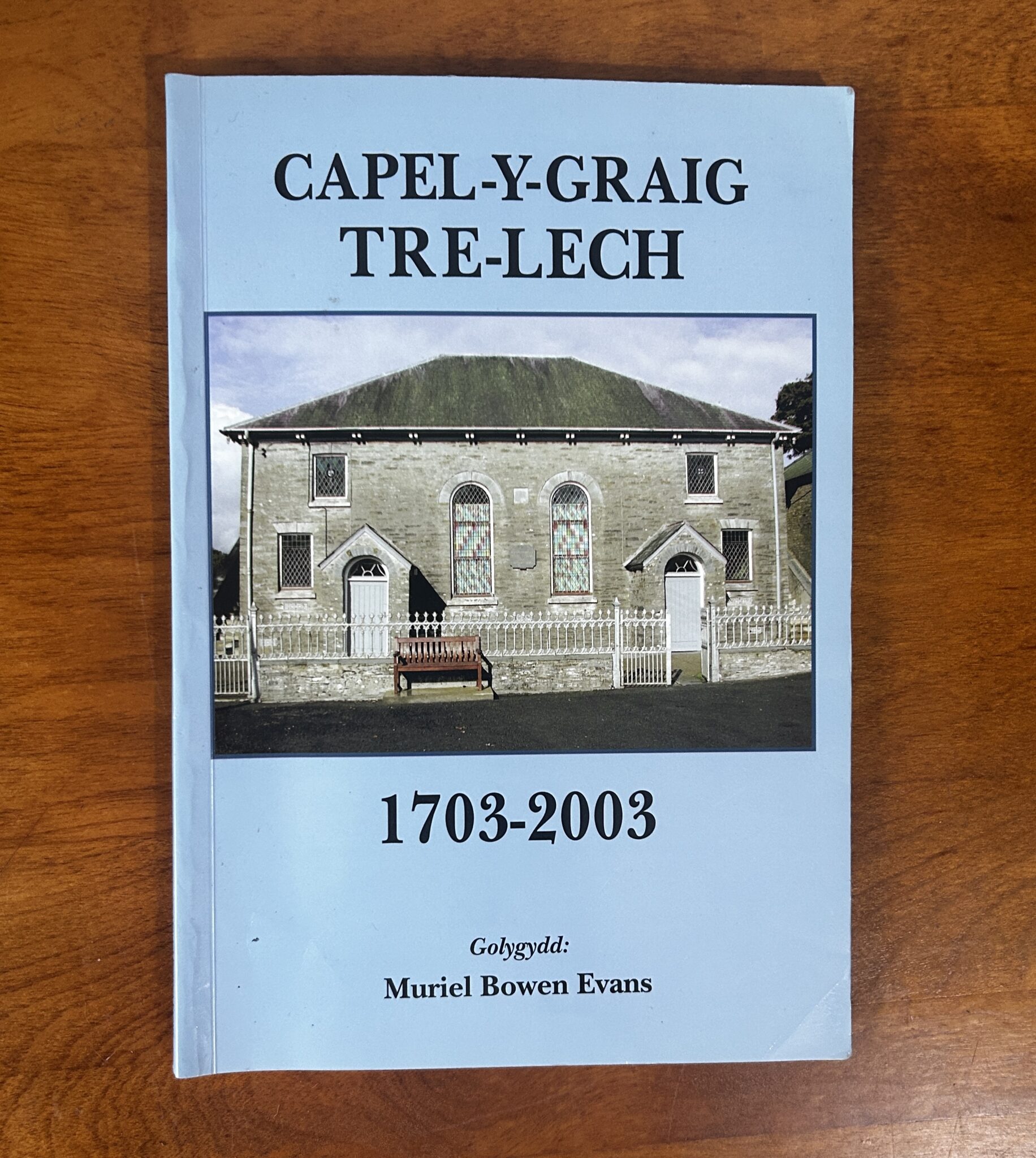
A book does not have to be especially old to be scarce, either. A history published in 2003 about a specific church in Carmarthen, Wales might be much harder to find than an 1880 county history that has since been digitized by several libraries. What matters most is not whether a librarian or bookseller would technically call a book rare, but how difficult it is to locate.
Searching for Rare Books
1. Start with what You Know
Rare-book searches might not always begin with a neat title, author and publication date. Sometimes all you have is a half-complete citation in a family history written years ago. For example, you might find a reference that says little more than Tenmile County, 1950 or History of Yakima Valley, p. 457. Yes, it’s frustrating, but still enough to start looking.
Search different combinations of whatever information you have, including words from the title, the author’s name, publication year, publisher or place associated with the book. Try an exact phrase in quotation marks, but also search shortened versions. Catalogs, booksellers and earlier researchers don’t always record titles in exactly the same way.
If the citation comes from another book, check its bibliography (if available) and compare how the author cited other sources. An abbreviated footnote may make much more sense once you find the full entry elsewhere within the book.
My great-grandfather passed down handwritten family history notes on our Revolutionary War ancestors. Unfortunately, they did not include full citations. One citation that stood out to me was Lochner, Revolutionary Soldiers, Andrews, Archbold, and Cecil followed by various page numbers. Using the limited citation and several combinations of the information within that citation eventually led by to finding the full citation–“The Revolutionary soldiers : Charles Andrews, Thomas Archbold and Joshua Cecil and their descendents” by Electa Iantha Baltzell Lochner.
2. Search Library Catalogs Strategically
WorldCat.org is one of the best places to start looking for an uncommon book. It can help confirm that a title exists, identify the author and publication details and show which participating libraries report owning a copy.


Once you find a likely match, look at the whole catalog record instead of stopping at the title. The publisher, publication date, edition and subject headings can all help confirm that you have found the right book. Subject headings can also lead you to related titles.
For example, while researching my Huss ancestors, I came across a mention of a book called “The family tree of John Huss” without an author, publication date or publisher in another genealogist’s writing. By searching for the keywords Huss and Pennsylvania on WorldCat.org, I was able to find The family tree of John Huss of Iowa by Fae Elaine Scott (1978). WorldCat.org shows that it’s available in nine libraries and was self published in Ohio.
While WorldCat.org is useful, but it should not be the only catalog you check. If a book is connected to a particular place, search local library, state library, university and historical society catalogs directly. This is especially important for genealogy materials because locally published books often stayed local–not widely published or held by many libraries or societies.
3. Looking Beyond Big Catalogs
Some of the hardest books to find were never really part of the commercial book trade. A family researcher may have typed up a genealogy, printed a few dozen copies and handed them out at a reunion to relatives. Churches, schools, historical societies and lineage organizations have done the same with anniversary books, cemetery transcriptions and local histories.
Those publications (and older books) may never have had an ISBN, been sold in bookstores or circulated far enough to appear in major catalogs like WorldCat.org. In those cases, look at historical and genealogical societies, local libraries, state archives, university special collections, religious archives and other repositories that collect heavily in a particular place or subject.
Don’t rely entirely on a repository’s main catalog, either. Even the Library of Congress’ special collections aren’t fully cataloged in the main catalog. Some institutions maintain separate local history indexes, collection inventories or archival finding aids. A privately published family history might not be cataloged as a standalone book at all within the main catalog. Instead, it may have arrived with someone’s personal papers or donated research collection, and can only be located within a separate index or finding aid.
It can help to ask yourself who would have cared enough to save the book. If you are looking for a church history, check the congregation or denominational archive. For a local history, look at the town library and county historical society. If a longtime local historian or genealogist compiled the book, find out where that person’s papers or personal library ended up.
4. Request a Loan or Visit
Finding a library that owns the book is only half the battle. If it is hundreds of miles away, start by asking your local library about interlibrary loan. Rare or fragile books may not circulate, but plenty of out-of-print titles still do.
If the book can’t be borrowed, contact the holding institution directly. Many libraries and archives will provide limited scans or photocopies, sometimes for a fee. Be as specific as you can. If you know which pages you need or have found a surname in the index, include that information in your request.
It’s also worth contacting the repository to ask staff for not only more information about the book itself, but also its condition, any access restrictions and related material in the collection. For books held in special collections, you may need to visit in person or hire a local researcher.
Before you start planning a research trip, though, check one more thing: Has the book already been digitized? WorldCat.org and individual library catalog records sometimes link directly to digitized copies, so look closely for online access, electronic editions or links to digital collections. Even if the catalog does not provide one, a digital copy may still be available elsewhere.
Searching Digital Book Collections
Once you know exactly which title and edition you are looking for, search the major digital book collections. A book that is rare on library shelves may already be freely available online.
- Google Books is useful for older county histories, directories and genealogies.
- Internet Archive has digitized books contributed by libraries and institutions around the world.
- HathiTrust contains millions of volumes from academic and research libraries, though full access depends on copyright.
- Genealogists should also check the FamilySearch Digital Library, which includes many family histories, local histories and genealogy society publications.
Don’t rely on just one site. A book missing from Google Books may be sitting on Internet Archive, and titles do not always appear under identical metadata from one collection to another.
If you find a digital copy, compare the publication information with the title you are looking for. You may have found a later edition, a reprint or another volume with a nearly identical title, which may have different page numbers.
Searching Used and Antiquarian Booksellers
Libraries are not the only places to look. Used-book marketplaces and antiquarian booksellers can be useful, even if you have no intention of buying anything.
Sites such as AbeBooks, ViaLibri.net, and even Ebay may have listings that include the complete title, author, publisher, publication date, edition and photographs of the cover or title page. When you are working from a vague or incomplete citation, those details can be enough to identify the book and then locate a library copy elsewhere.
You can also find specific rare book sellers through the Antiquarian Booksellers’ Association of America.
Search the exact title, but also try shortened versions and the author’s name. Sellers may leave out subtitles, abbreviate names or use punctuation that differs from a catalog record.
If you do want a copy, make sure that you compare editions before purchasing. A later reprint may be perfectly fine if you only need the text, while an original edition may matter if you are interested in maps, photographs or other physical features (or finding specific pages). Older books may also predate ISBNs, so an ISBN search alone will not get you very far.
For significantly scarce titles, utilize saved searches and alerts. A book that hasn’t appeared for sale in years might suddenly surface when someone sells a private collection or a library weeds their collection.
For example, I was able to purchase a copy of an obscure church history book (pictured above), that mentions my Welsh ancestors by name, years after I set up eBay notifications for listings. And yes, it was published only in 2003 (and in Welsh–which I don’t speak)!
Plus, before paying a small fortune for an obscure county history, check the library catalogs and digital collections one more time.
Follow the Book Trail
Once you identify one book, use it to find others. Check bibliographies, footnotes and references for earlier publications, then search those titles separately. Look up the author as well. Local historians and genealogists often wrote about the same subjects more than once, and one book may lead you to another that is even harder to find:
Pay Attention to Provenance and Marginalia
Sometimes the most interesting part of a rare book is not the printed text.
Provenance refers to the history of a particular book’s ownership. Bookplates, signatures, inscriptions and library stamps can tell you where a book has been and who once owned it. For genealogists, that can be especially interesting when a family history belonged to someone actually mentioned in its pages.
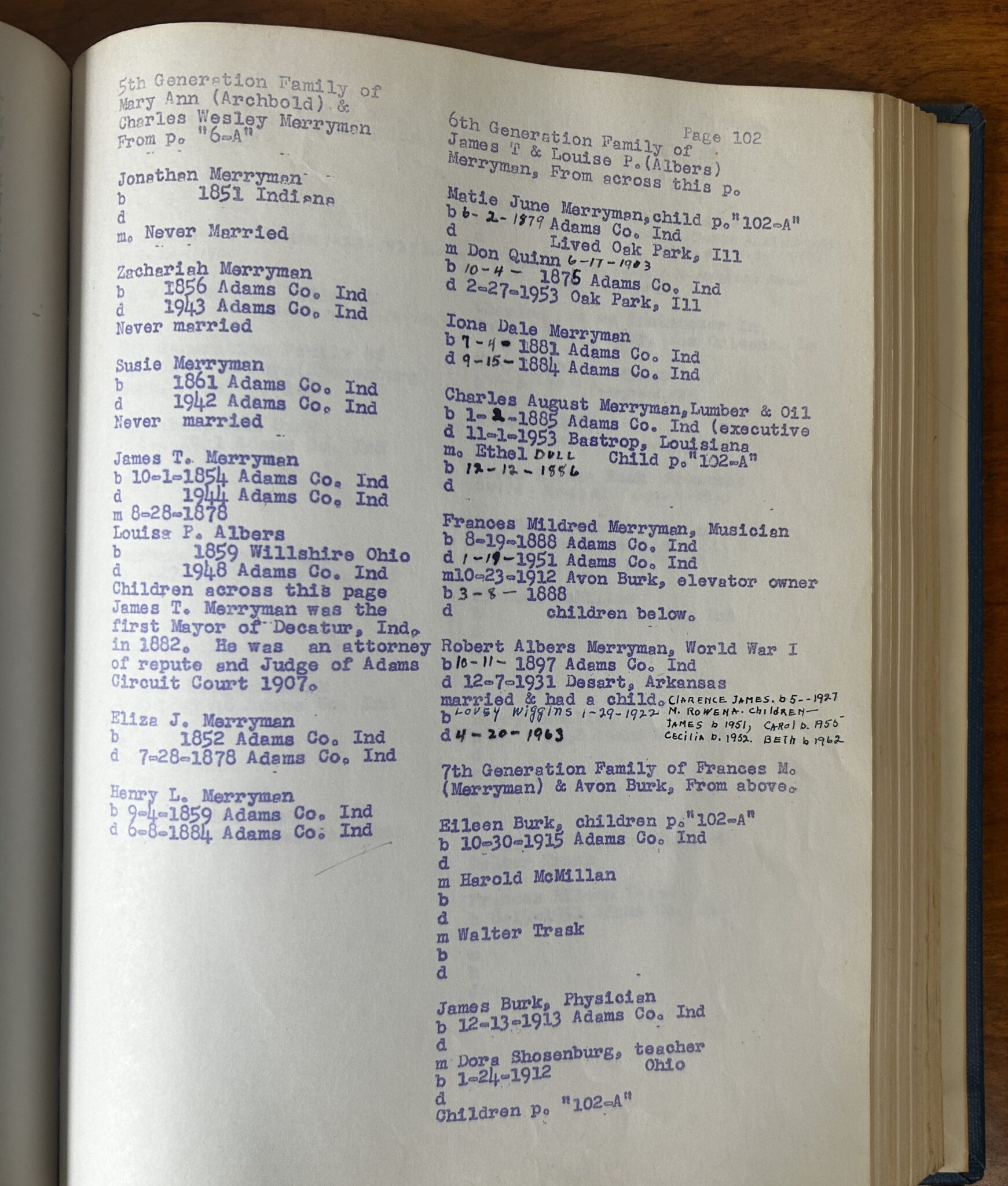
Also check for marginalia, or notes added by previous readers. Someone may have corrected a date, added a married name, identified a person in a photograph or written a relationship beside a printed entry. Newspaper clippings, letters and other scraps may also have been tucked between the pages.
Note that these additions aren’t automatically accurate, but they can provide clues that may not exist in other copies. It’s also a reminder that two copies of the same book are not always exactly the same: a digitized version might give you just the printed text, but it won’t show you the handwritten notes sitting inside another copy on a library shelf.
Remember that example of The Revolutionary soldiers : Charles Andrews, Thomas Archbold and Joshua Cecil and their descendents? The copy I now own has handwritten notes about our family history made by my great-grandfather tucked within the margins of the book–information that he corrected and added to.
Keep Track of the Hunt
If you are looking for several difficult titles, keep a simple list of what you are trying to find. Record the title, author, publication date, edition and any repositories that hold copies. Note which catalogs and digital collections you have already checked and whether you have set any bookseller alerts.
It might feel unnecessary in the moment, but it is surprisingly easy to forget that you already spent an evening searching six catalogs for the same elusive family history.
A version of this article was published online in August 2026.
Related Reads


Use these five catalog research strategies to find your ancestors in library collections.

Author

Katharine Korte Andrew MS/LIS is a digital editor for Family Tree Magazine and professional genealogist.