Nearly every American has ancestors who came to the United States from somewhere else. Their stories capture our imaginations: penniless families enduring perilous journeys on crowded ships in the hopes of a better life. Many genealogists share the goal of documenting those stories and following all their ancestral lines back to the Old World.
Every immigrant’s story was different. But the strategy for learning about them is largely the same. The instructors of our past online master class “Find Their Hometown” emphasized the importance of homing in on three details about immigrant ancestors: their birth name, a birth or marriage date, and (as the title of the course implies) the name of their hometown.
Put another way: Simply knowing that your ancestor came from “Sweden,” “Poland,” or “England” isn’t enough. To find records back in the old country, you’ll need to drill down to the county or (preferably) town level.


For years, my Swedish great-grandfather Oscar Lundeen and his wife, Mary (Maria) Eckstrom, presented a brick wall for me. I couldn’t find the Lundeens anywhere in Swedish records, despite family lore asserting that country as their place of origin.
Fortunately, I asked just the right questions of just the right people to capture family knowledge before it was lost.
This case study, adapted from my presentation given during the course, shows how to overcome challenges to identify specific hometowns—then find records of ancestors in them. It underlines the importance of deliberate research and share some of the most-effective strategies for documenting immigrant ancestors.
Family Stories and Family Bibles
Shortly before my aunt Ginny passed away, I explained my Lundeen predicament to her. What she said next changed the course of my research: “Oh, didn’t you know they were Inglessons back in Sweden?”
No, Aunt Ginny, I did not know that. That would have been helpful information to have a long time ago—and it would have saved me a lot of trouble!
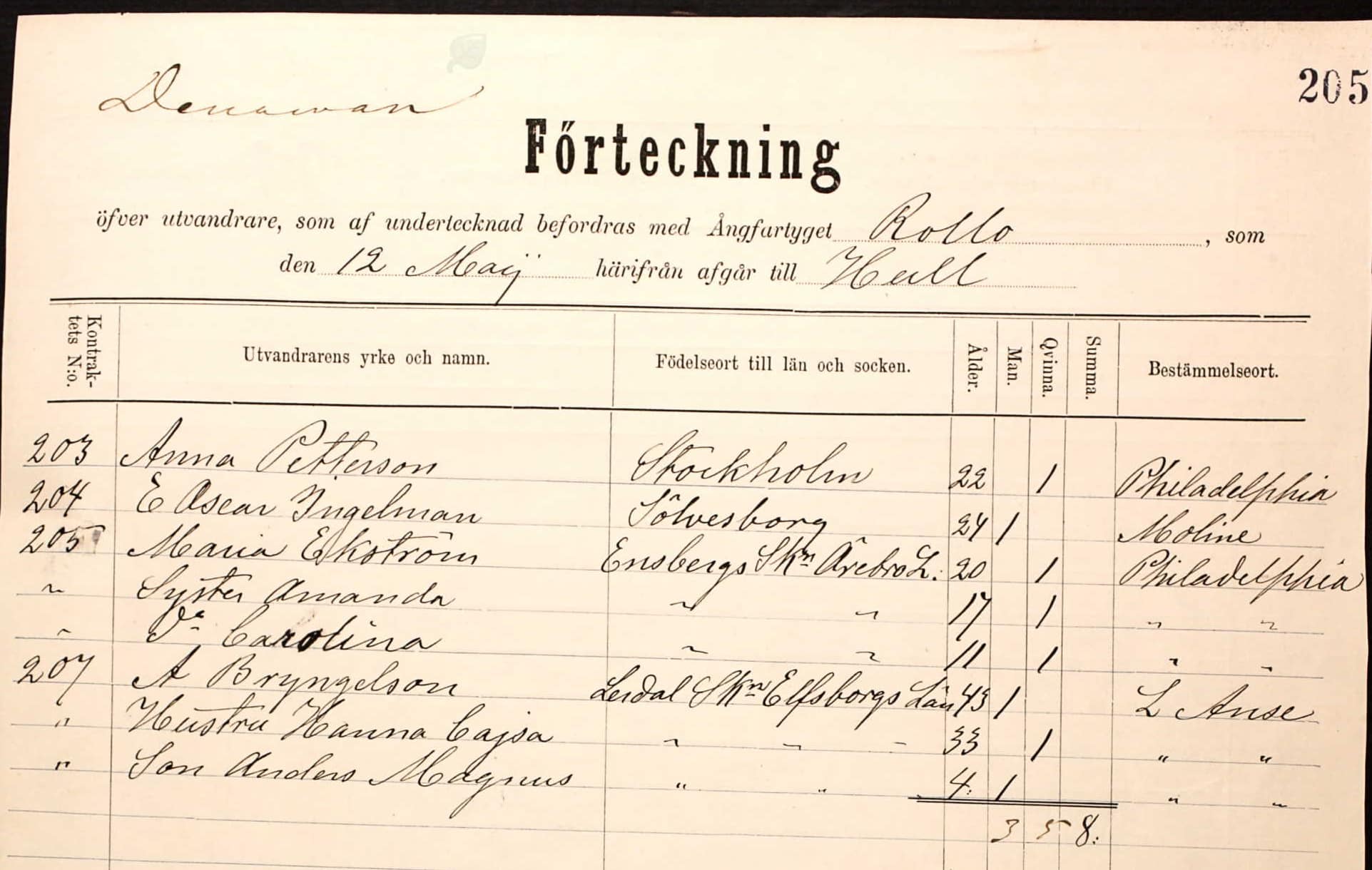
Sure enough, I found an arrival list with an (E.) Oscar Ingelman alongside a Maria Eckstrom. (Throughout his life, he went by Lundeen, Ingelman and Inglesson.) From there, I was able to flesh out the family after they arrived in the United States.
After Ginny passed, I reached out to my second cousin Pat, with whom she had been close. I explained my research to her, and after a while she broke down and said something else that changed my research: “Well, maybe I should just send you the family Bible.”
That was another “Say what?!” moment—We have a family Bible? And I happened to reach out to its keeper?
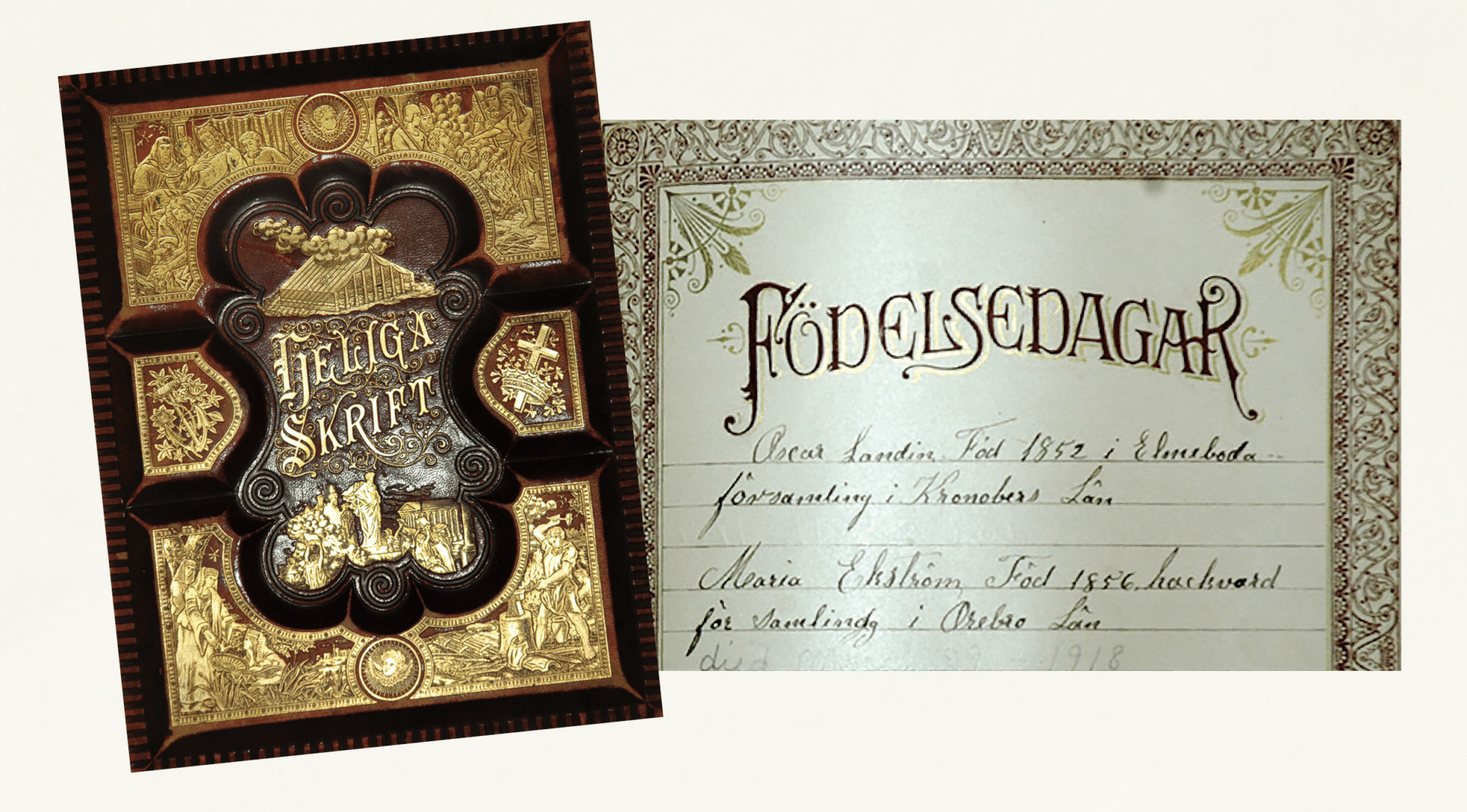
Pat shipped the book to me. Though its binding needed repairs (and it was printed in Swedish), the Bible contained exactly the kind of information you hope for: a handwritten record of births.
Spelling Headaches
One page of the Bible listed details of younger members of the family, most of which I already knew. But I was hopeful the opposite page (on older members) might have that critical place name I was searching for.
Sure enough, Oscar and Maria were listed in the page’s first two entries. But I couldn’t make out the handwriting in Maria’s birthplace. Did it say Hackvad? Hackvard? Harvard? (Surely, she didn’t come from Harvard…)
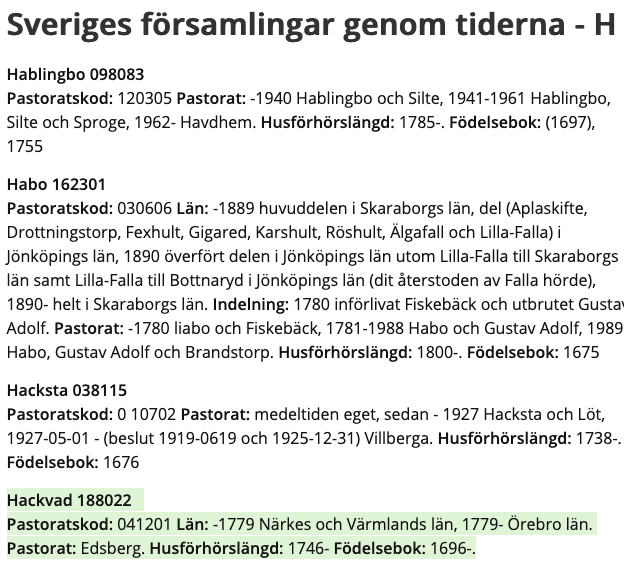
Using wildcards, I searched for a place name similar to that in online gazetteers. The eventual result was Hackvad, the place name that would unlock everything.
From the FamilySearch Wiki, I found a digitized gazetteer titled Sveriges församlingar genom tiderna (Swedish Parishes Throughout Time). In it was an entry for Hackvad that included not just the town name but also the county (Län) and the name of an associated parish: Edsberg.
In Old Sweden, the state Lutheran church recorded all vital events—whether the celebrants were professed Lutherans or not. With a parish name, then, I was able to unlock a variety of church and civil records for the Eckstrom family.
Turning Place Names into Genealogy Records
ArkivDigital is the central hub for Swedish genealogy records, though sites like Ancestry.com and MyHeritage continue to grow their Swedish collections.
With the Hackvad place name in tow, I browsed ArkivDigital’s collections for the town. These included household examination records (a kind of census) and birth registers. I started with the former to make sure I was tracing the right family unit, then cross-checked against the birth registers in the collection.
Sure enough, household examination entries for Maria’s family track their movements in the early 1860s. In it, her birthplace is listed as the parish of Edsberg, not technically Hackvad.
As a result, it’s a good thing I looked for Maria in the household examination records first. I might never have found her if I’d looked just at vital records for Hackvad. And I wouldn’t have found anything if I hadn’t thought to talk to Pat and Aunt Ginny in the first place.
Related Reads


A version of this article appeared in the January/February 2026 issue of Family Tree Magazine.