Researching your ancestors who fought in the Revolution has never been easier thanks to a wealth of online resources.
But don’t limit your interest to the war’s front-line soldiers. Even ancestors who never picked up a musket endured hardship and showed courage during the eight years of conflict from the “shot heard ’round the world” to the Treaty of Paris.
Civilian records and other resources can give you insight into the everyday life of those who saw American independence come to fruition. The specific records vary by colony, but often include colonial censuses. (In fact, Ancestry.com is reconstructing censuses from 1660 to 1820.)
Read on for an overview of life in Colonial America—and how your ancestors did (or didn’t) support the Patriot cause on the home front.
Women’s Contributions to the American Revolution
Men marched off to fight for independence—leaving their wives and mothers to pick up their slack and continue their regular family obligations. Many women shouldered the men’s workload on farms and in small businesses in addition to their own.
Others (especially those of lesser means) flocked to cities and towns, where they had more opportunities for work and a larger support network. Still more followed army camps, tending to the wounded, cooking or doing laundry to support the troops.
Women of some means also raised funds for the patriot cause. As Esther de Berdt Reed (wife of Pennsylvania governor Joseph Reed) wrote, civilians had to forego luxuries in light of the war effort. This would provide “some extraordinary and unexpected relief … that will perhaps be valued by [the troops] at a greater price, when they will have it in their power to say: ‘This is the offering of the ladies.’”
In her Sentiments of an American Woman (1780), De Berdt Reed encouraged women across the colonies to participate. Groups like the Ladies Association of Philadelphia (founded by Reed) raised 300,000 Continental dollars by canvassing door to door.
Fundraising efforts were especially notable—even ironic—given common law at the time, which didn’t allow married women to have financial independence. Called “coverture,” the principle simply fused a wife’s legal identity into that of her husband. Women could not independently make a will, sign a contract or own property.


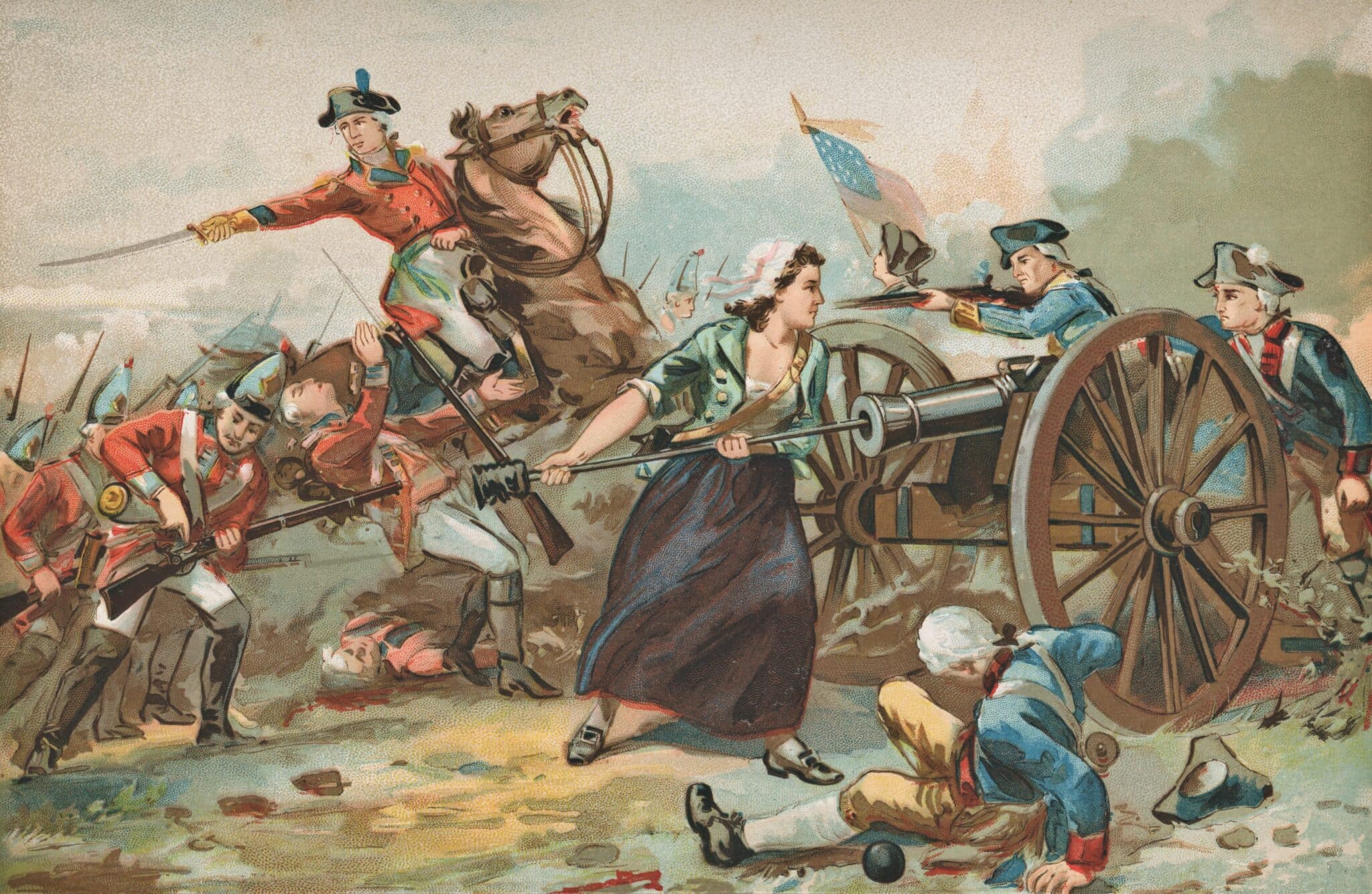
Other women took up arms themselves. Water-carrier “Molly Pitcher” is probably the most famous, supposedly taking cannon fire as she attacked British forces after they felled her husband at the Battle of Monmouth. Though historians do attribute such feats to a real-life Mary Ludwig Hays, the specifics of her story are apocryphal.
But accounts do refer to other women taking cannon fire in combat. During the November 1776 battle for Fort Washington, for example, a Margaret Corbin took over her artilleryman husband’s post after he was mortally wounded. Her fire proved so deadly that Hessians targeted her position and wounded her with grapeshot. Later, she became the first woman granted a lifetime disability pension from the Continental Congress—albeit at half the going rate for wounded men.
Researching Loyalists and Royal Sympathizers
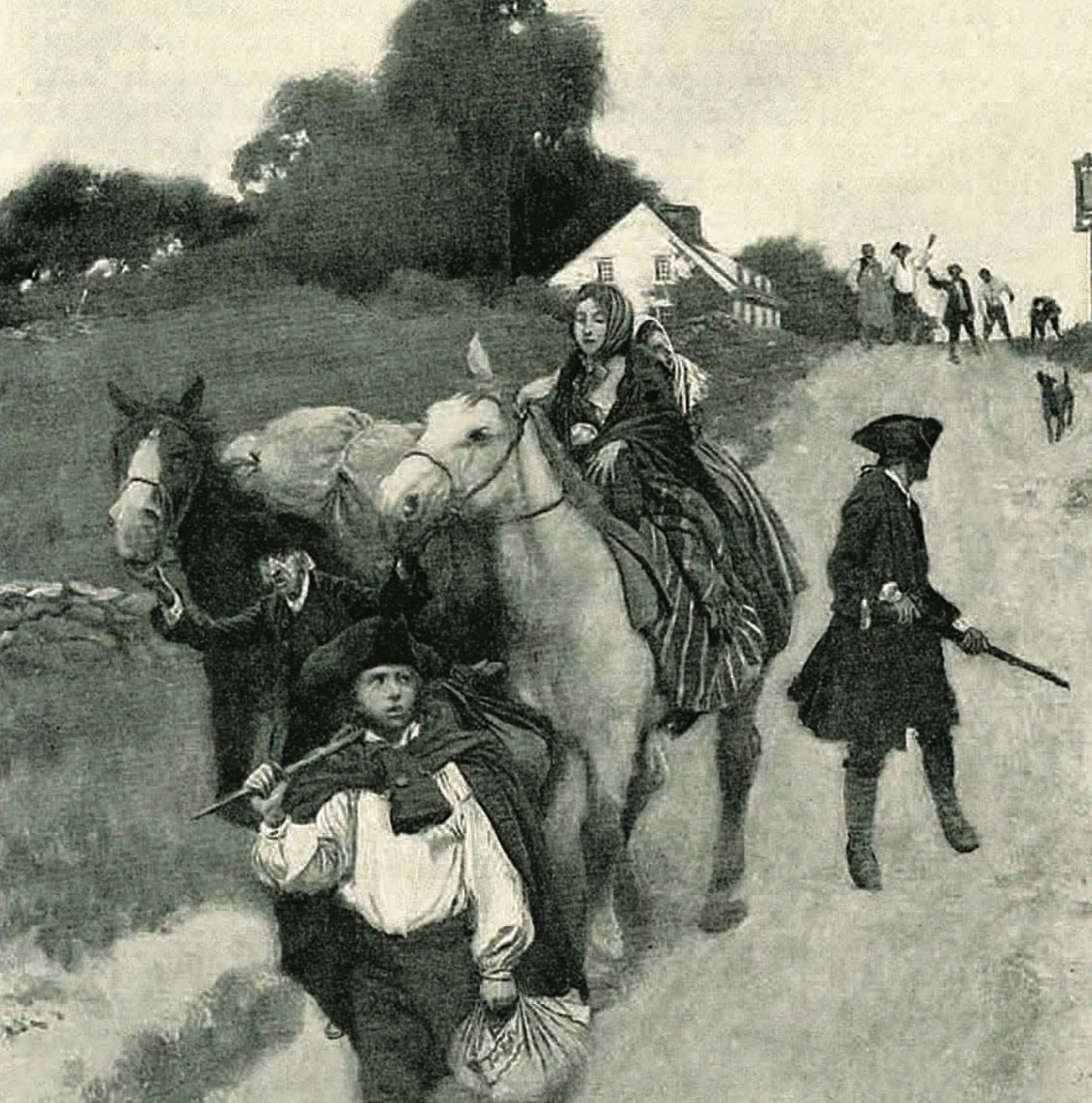
In many ways, the Revolutionary War was a civil war, pitting Patriots against Loyalists, neighbors against neighbors. It’s estimated that 20% of Americans remained loyal to Great Britain. Since the war was almost entirely (except for an attack on Canada) fought on American soil, it tore the future country apart. Ultimately, some 70,000 Loyalists chose exile over life among the victorious rebels.
Anti-royal sentiment was prominent—and sometimes harshly enforced—in many communities. Patriots wiped out evidence of British rule from public spaces: tearing down coats of arms from buildings; renaming streets, cities and institutions that used the word “king” or the names of British royalty; and burning or hanging King George III in effigy. The head of the rebel Committee of Safety in Dover, Del., threw a royal portrait into a bonfire, proclaiming, “Thus we destroy even the shadow of that king who refused to reign over a free people.”
Loyalists themselves were subject to various humiliations and punishments. Some were made to “ride the rail,” straddled over narrow poles and painfully bounced through the streets as crowds jeered them. More extreme (though rare) was tarring and feathering, in which victims were doused in boiling pitch, covered in feathers, and carried throughout town. And in the Carolina Backcountry, Loyalists were sometimes “spicketed”—impaled by a stake driven through the victim’s foot.
Several websites and databases can help you find Loyalist ancestors.
Family Life in the Revolutionary Era
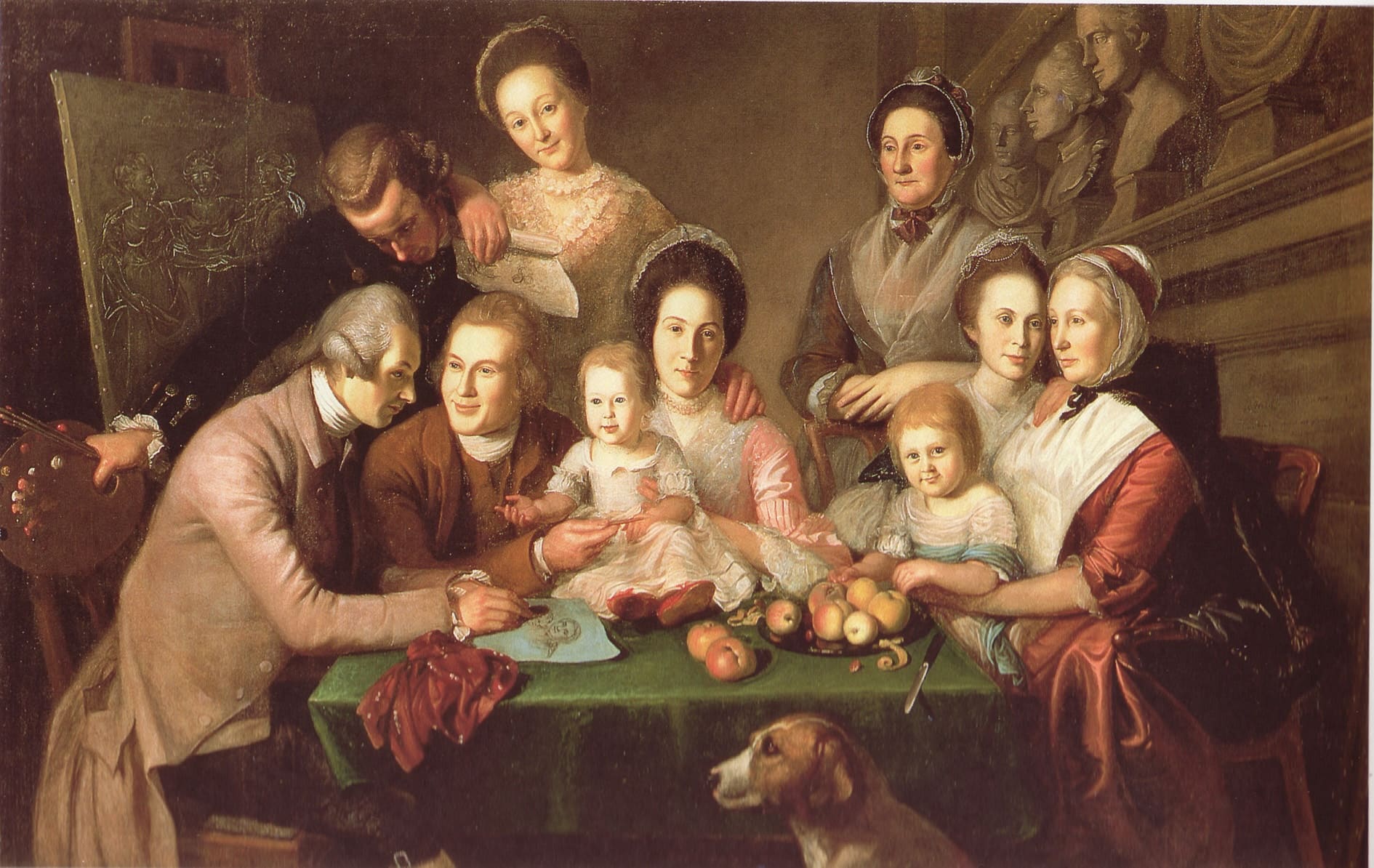
Many American families lived in relative comfort, even during the Revolution. A wide variety of food was available—much of it smoked, salted, pickled or dried, given the lack of refrigeration. Women and girls could make most of a family’s garments themselves.
Washing those clothes was a laborious, multi-day process: soaking, boiling in soapy water, scrubbing, rinsing and line-drying. Soaps were made from animal fats and lye. Janet Schaw, an Scottish woman who visited North Carolina, wrote disapprovingly that “all the cloaths coarse and fine, bed and table linen, lawns, cambricks and muslins, chints, checks, all are promiscuously thrown into a copper … while a Negro wench turns them over with a stick.”
Eighteenth-century families tended to be larger than they are today, often numbering seven to 10 children. Siblings typically shared a single bedroom and played with toys hewn from scrab fabric (dolls) and wood (cups, balls, tops and “Jacob’s ladders”).
Plunder, Inflation and Disease During the Revolutionary War
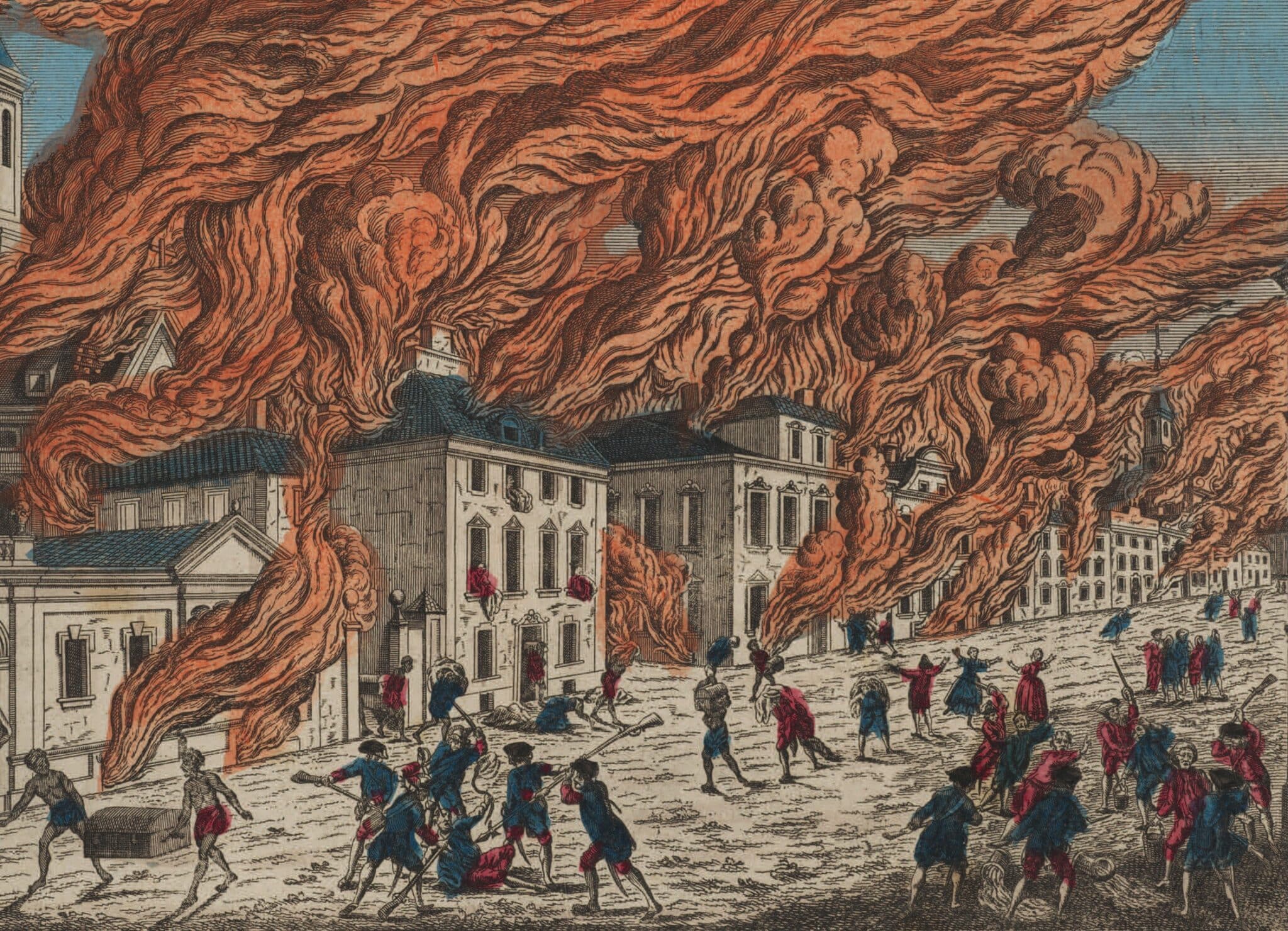
Supporters of the rebellion faced adversity in communities dominated by Loyalists. Occupying British forces demanded provisions from civilians, for which they were paid in promissory notes. Roving bands of Loyalists (called “cowboys,” or “skinners” in some sources) raided cattle to feed the British troops. They were sometimes met by Patriot sympathizers tasked with thwarting them—with violence, if necessary.
That foraging turned to outright plunder and violence against civilians. Wives and daughters of patriot households were assaulted; when their male family members tried to protect or avenge them, the men were shot.
Even in small ways and in the once-wealthiest towns, life became harder and meaner. In Philadelphia, which the British occupied in 1777 and 1778, the streets and alleys stank of garbage and sewage due to neglect and overcrowding. Homes were looted, and orchards felled for firewood. Not even churches were spared.

In the wealthy rural enclave of New York’s Westchester County, Timothy Dwight, an army chaplain and future president of Yale, recorded the devastation. “Fear was, apparently, the only passion by which [the pillagers were animated,” Dwight wrote.
“Their houses … were, in a great measure, scenes of desolation. Their furniture was extensively plundered or broken to pieces … Their cattle were gone … Their fields were covered with a rank growth of weeds and wild grass.”
The Continental Congress wreaked a different kind of havoc of its own. Unable to raise taxes to pay for the war, the provisional government simply printed nearly $250 million in “Continentals”—paper money backed only by the good faith of Congress. With dubious currency competing for dwindling supplies of goods, inflation soared.
A further hardship affected both sides and all races: smallpox. A continent-wide epidemic that began in 1776 claimed about 100,000 lives—nearly double the deaths in battle from both sides combined.

Religion in Colonial America
The vast majority of Colonial families were Christian, organized into some 3,200 congregations. Colony founders brought with them Anglicanism and Puritanism. And the First Great Awakening of the 1730s and 1740s swelled the ranks of other Protestant denominations, such as Presbyterians, Baptists and Methodists.
However, the Church of England remained the established religion in most places, especially in Southern colonies. There, taxpayers were often required to pay the salaries of Anglican clergy, regardless of their own faith. Inside Anglican churches, seating could be assigned to reflect a congregant’s status in the community, with wealthy families up front.
The Congregational denomination (which had evolved from Puritanism) prevailed in New England. Connecticut and Massachusetts, for example, taxed their residents for Congregational churches; find indexes for records of the former here.
In Pennsylvania and New Jersey, the Society of Friends (whose members are called Quakers) was especially active. Quakers advocated pacifism, drawing them into conflict with the independence movement when it turned violent. (Thomas Paine quoted—and rebuffed—Quaker thinkers in his writing: “The setting up and putting down of kings and governments is God’s peculiar prerogative.”) Some refused to swear allegiance to or pay taxes toward the Revolutionary government, leading to some arrests and imprisonments. Others broke with strict pacifism; many of these “Free Quakers” were expelled.
Quaker congregations are notable for their voluminous, dedicated record-keeping. For a guide to researching them, see the FamilySearch Research Wiki and Ancestry.com. Ancestry.com has a collection of Quaker meeting records as well as a multi-volume Encyclopedia of American Quaker Genealogy.
Catholics represented just 2% of the Colonies’ overall population but 15% of the population of Maryland (which was founded as a haven for Catholics). Many colonies openly forbid Catholics from settling there; in fact, there was no Catholic church south of Maryland until 1796.
On the other theological extreme, Deism—belief in a “watchmaker God” who left His creation alone—gained popularity among educated elites, including founders Benjamin Franklin and Thomas Jefferson. Springing from the works of philosophers such as John Locke, Deism advocated a separation of church and state in favor of the government protecting “natural-born rights” of its citizens.
Jewish congregations had been established in America as early as the 1650s, mostly in Northern colonies such as Rhode Island and Pennsylvania (which had protections for religious freedom). Many Jews met in small groups at homes or rented spaces; the oldest surviving synagogue was dedicated in 1762.

Free and Enslaved African Americans in the Revolutionary War
Most of the roughly 500,000 African-Americans in 1776—about one-fifth of the total population—remained in bondage both during and after the Revolution. Liberty would not be extended to those Americans for almost another 80 years.
Some African Americans saw the Revolution as a chance at freedom. In New England, slavery fell out of favor in part because of its noted inconsistency with Patriot values. Many Founding Fathers, after all, referred to British rule as a kind of “slavery.” And freed Black men enlisted in colonial militias and the Continental Army; a few dozen fought at the Battles of Lexington and Concord, for example, and Black soldiers fought and lived alongside white soldiers in integrated regiments that would not be replicated for almost 200 years.
But others had the bitter realization that the principle of “all men are created equal” didn’t apply to them in practice. British generals lured enslaved people to flee their enslavers in the South, hoping to weaken the rebel cause. Some 20,000 took the British up on the offer and were granted emancipation and evacuated along with white Loyalists.
You can learn more about African Americans in the Revolution at the American Battlefield Trust and the Museum of the American Revolution.
A version of this article appeared in the May/June 2026 issue of Family Tree Magazine.
Related Reads