Historians estimate that one-fifth of the Colonial population (about 400,000 people) remained loyal to the Crown. Known variously as Loyalists, Royalists, Tories or King’s Men, they faced difficult decisions before, during and after the war as revolution roared around them.
Researching Loyalists today requires not just historical documents, but also diligence. Families changed names, relocated and deliberately obscured their past to reintegrate into postwar America.
This guide will show you how to use records to rediscover the stories of your Loyalist ancestors—uncovering the “other side” of Revolutionary War genealogy.
Before the War: Identifying Loyalists
Loyalist sentiment emerged not just in response to revolutionary zeal, but from a variety of established factors that reflected broader patterns of Colonial integration into British society:
- Religion: Religious affiliation served as perhaps the strongest predictor of Loyalism. Because the Church of England was the established church in many colonies, the Anglican clergy overwhelmingly supported England. So did many of their parishioners. Other denominations, notably pacifist churches (Quakers, Mennonites, and related Anabaptists), added a different dynamic. They opposed any warfare, and officially remained neutral. To Patriot communities, that reluctance to choose a side could come across as tacit support for the Crown.
- Economic status: Colonists whose livelihoods depended on imperial structures—merchants, customs officials, officeholders—feared financial ruin if ties were broken. Rebellion was a direct threat to their income, patronage and social standing. Tax lists from this period illuminate those networks of trade and financial obligation, featuring many wealthy merchants and professionals in cities like New York, Philadelphia and Charleston who later declared themselves Loyalists.
- Geography: Subjects who prized social stability tended to associate the Patriot cause with violence, mob rule and militant rhetoric—an assault on order and tradition. This extended to frontier regions like the Carolina Backcountry and New York’s Mohawk Valley, where settlers (many of them recent immigrants) relied on British protection against raids. This was of particular importance in the wake of the French and Indian War (1754–1763).
- Military service: Men who declined service in colonial militias before the war were also more likely to have Loyalist sympathies during it. They were sometimes called “Non-Associators” for their refusal to sign “Articles of Association,” in which Colonial militiamen pledged to defend against British aggression, drill regularly, and obey provincial committees.
Researching Loyalists today requires not just historical documents, but also diligence. Families changed names, relocated and deliberately obscured their past to reintegrate into postwar America.


During the War: Tracking Loyalist Activities and Records
Throughout the war, various agencies and organizations generated documents that reported on Loyalist activity in real time. Here are some of the most-prominent records.
Oaths of allegiance
Oaths of allegiance, muster rolls, and newspaper accounts all shed light on a person’s political leaning. But records of oaths, taken either to the Revolutionary cause and local governments (the Oath of Allegiance) or to the Crown (the Oath of Fidelity), are primary tools for identifying Loyalist individuals.
Some oaths were required by law and carried penalties for non-compliance. The Loyalists in the American Revolution by Claude Halstead Van Tyne (Macmillan) includes an appendix that details each colony’s legislation.
Oath records are scattered across multiple institutions and research facilities, including local libraries, universities, historical societies and archives.
Military records
People took military oaths in addition to the previously discussed civilian ones. Records of military allegiance and service (to either Continental units or Loyalist provincial units) represent the most-systematic documentation of partisan sentiment. The latter units, from the famous Queen’s Rangers to local companies, maintained records similar to those of British Army units.
The UK National Archives in Kew hold some of these documents in War Office (WO) series 28, as well as Headquarter Records: America, 1775–1785. The Library and Archives Canada have their own Loyalist muster rolls in varying degrees of completeness. And some records are at FamilySearch or Ancestry.com, the latter of which has three volumes of Loyalists who served in the Southern Campaign.
Newspapers
Contemporary publications might mention Loyalist activities, community organization and military service. Papers in New York City (which was a Loyalist stronghold for most of the war) were especially active. Historian Timothy M. Barnes published an article on the abundance of such titles in a 1974 issue of the Proceedings of the American Antiquarian Society.
After the War: Following the Diaspora
As the war turned in the Colonists’ favor and ultimately ended in British defeat, Loyalists faced a hard choice: Remain in a country that might feel hostile to them, or start anew somewhere else?
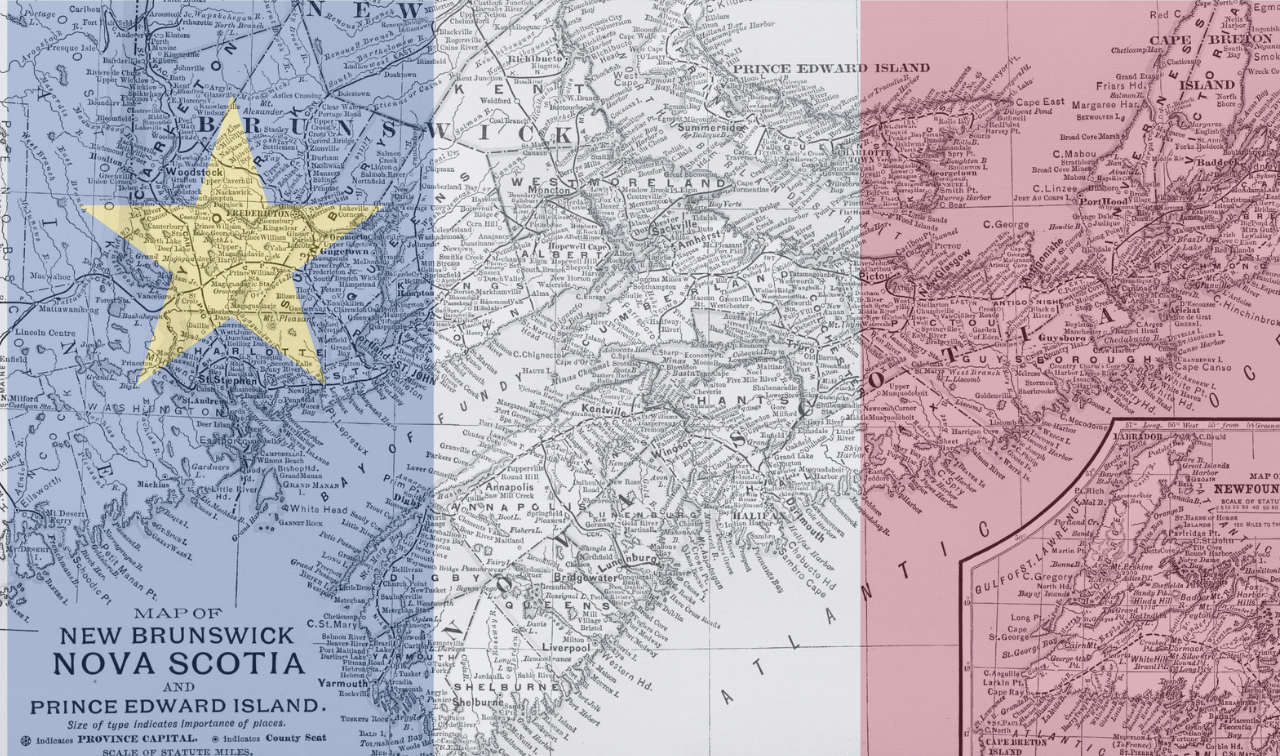
Many opted for the latter, leaving the new United States for friendlier regions. Roughly half (some 30,000 to 50,000) settled in British North America—namely, Canada. But thousands more sailed to England or her colonies abroad:
- The Bahamas
- Jamaica
- Bermuda
- Florida (then under British control)
- India
- West Africa
- Australia
For those who stayed in the United States, the years following the Revolutionary War generated an unusually systematic set of records: land confiscations, land petitions, claims for compensation, and more. Loyalists abroad, too, were recorded amidst family separations, economic ruin, and reintegration in other parts of the British Empire.
The records that follow are some of the most useful for tracing Loyalist ancestors after the war. In addition to these, American Migrations, 1765–1799 by Peter Wilson Coldham documents the movement of Loyalists and other populations during and immediately following the Revolution.
Seizure records
Each colony enacted strict laws that authorized the confiscation and sale of Loyalist lands. In addition to punishing allegiance to the Crown, the process rose revenue for the colony and helped populate it with like-minded Patriots.
The specific framework for such laws varied. In some, the legislature would put forward a bill of attainder, in which a Loyalist was found guilty of treason and made to forfeit their property and estates (as well as their civil rights).
New York had one of the most aggressive procedures, and records of confiscations are preserved in a collection on Ancestry.com. Court records sometimes show that Loyalists attempted to reclaim confiscated land.
Newspapers
Colonial newspapers frequently advertised land confiscations and sales of Loyalist properties. One such New York paper in 1784 announced the sale of eight Loyalist estates and specified the house and lot, as well as whose property it had once been. When searching newspaper database for these articles, use key phrases such as absentees, public sale, auction, seized or confiscated.
Some papers also reported on relocation plans for Loyalists, who may have tried to arrange for a private sale before their land was confiscated.
Land records
Loyalists who were exiled or otherwise left the Thirteen Colonies for British Canada sought land either by purchase or through programs chartered by the Crown. These transactions survive in land petitions, which are indispensable primary sources for reconstructing Loyalist resettlements.
The files include numerous details about applicants: their wartime sacrifices, family compositions, and details of their migration. Claimants provided handwritten petitions supported by affidavits verifying their age, moral character, loyalty and identity. They also often contained a sworn oath of allegiance to King George III.
Land petitions are fully indexed and searchable through the Library and Archives Canada database for Lower Canada petitions (modern Quebec and Labrador) and Upper Canada (modern Ontario).

Claims Commission case files
In 1783, Parliament established the Loyalist Claims Commission to investigate and compensate for losses incurred before that year. Their work produced an extensive body of case files that constitutes one of the most significant primary sources for Loyalist research.
Extant records provide exceptional detail regarding pre-revolutionary circumstances, wartime experiences, and postwar resettlement:
- Details of the claimant’s losses
- Supporting documentation
- Witness testimony from neighbors and others (which often reveal family relationships, business partnerships, and other community connections)
- Reports evaluating the claim
The commissioners’ systematic approach means that even unsuccessful claims provide valuable biographical information.
The UK National Archives holds case files in the Audit Office (AO) series: AO 12 (1776–1831) and AO 13 (1780–1835). The University of New Brunswick hosts finding aids, which have additional information about the claims process. And Loyalist claims from 1776 to 1835 are online at Ancestry.com.
United Empire Loyalists
Some migrants to Canada were granted status as United Empire Loyalists (UEL), individuals recognized for their unwavering loyalty to the Crown prior to 1783. The distinction conferred land grants, social prestige, and a special place in the founding identity of British Canada.
The United Empire Loyalists’ Association of Canada (UELAC) maintains a lineage registry for proven descendants, and its records in the Library and Archives Canada provide researchers with one of the most systematically documented migration and resettlement trails.
Special Populations
Loyalist research incorporates other diverse populations whose stories challenge conventional narratives about the Revolutionary era.
Women Loyalists
Per the legal doctrine of coverture, women were considered the same entity as their husbands. Women Loyalists faced documentation challenges rooted in their legal identities.
Yet their voices emerge with surprising clarity in the testimony preserved within the Loyalist Claims Commission files, held in the same Audit Office series. Widows and abandoned wives testified directly before commissioners, producing detailed accounts of lost property, family separation, and personal hardship that few other record types can match.
Their contributions to the Loyalist cause were far from passive. Women managed family estates during their husbands’ absences, sheltered British soldiers, gathered intelligence, and in some cases filed claims entirely in their own right. Commission records are thus an essential starting point for any researcher tracing a female Loyalist ancestor.
Black Loyalists
The story of Black Loyalists is among the most complex and poignant of the Revolutionary era. Lord Dunmore’s proclamation of November 1775 promised freedom to enslaved people who joined British forces. Though a calculated war measure, the offer nonetheless ignited hope among thousands of people.
By the conclusion of the war, Black Loyalist population encompassed a wide spectrum. Some free persons cast their lot with the Crown before the war, while other men and women self-emancipated during the conflict. Still others were transported as enslaved property by white Loyalist masters. Learn more about their experiences through the Black Loyalist Heritage Centre and this Findmypast blog post.
The Book of Negroes, a compilation of ship manifests from 1783, records roughly 3,000 Black Loyalist refugees who sailed from New York to British Canada. Each entry notes the person’s name, physical description, and claimed legal status, as well as the name of the vessel and the name of their former enslaver.
Two separate original versions of the lists survive. The British version, found among the papers of British general and governor Sir Guy Carleton, is fully searchable online through the Nova Scotia Archives. The American adaptation, documented in Graham Hodges’ Black Loyalist Directory, is held at the National Archives in Washington, D.C. and searchable on Ancestry.com.
Native American and First Nation Loyalists
Most Native American groups initially sought neutrality in the Revolutionary War. But as the conflict intensified, the pressure to choose sides became unavoidable.
Prewar British policies attempted to limit white settlement onto Native lands—for example, through the Royal Proclamation of 1763. The Mohawk, Seneca, Cayuga and Onondagas sided with the British. But other members of their Iroquois Confederacy (the Oneida and Tuscarora) sided with the Colonists, shattering centuries of political unity. Though the British were defeated at Yorktown in 1781, fighting between Native warriors, Loyalist rangers and Patriot militia continued.
The Treaty of Paris proved disastrous for Native Loyalist allies, as it called for Britain to cede all territory east of the Mississippi River to the United States. That left communities who fought for the Crown suddenly without protection, exposed to westward expansion.
The Library and Archives Canada hold extensive documentation on Joseph Brant (Thayendanegea), a prominent Mohawk leader and diplomat during the Revolutionary era. Records cover his legal negotiations, postwar leadership, and correspondence regarding Six Nations affairs.
Case Study 1: The Franklin House, Divided
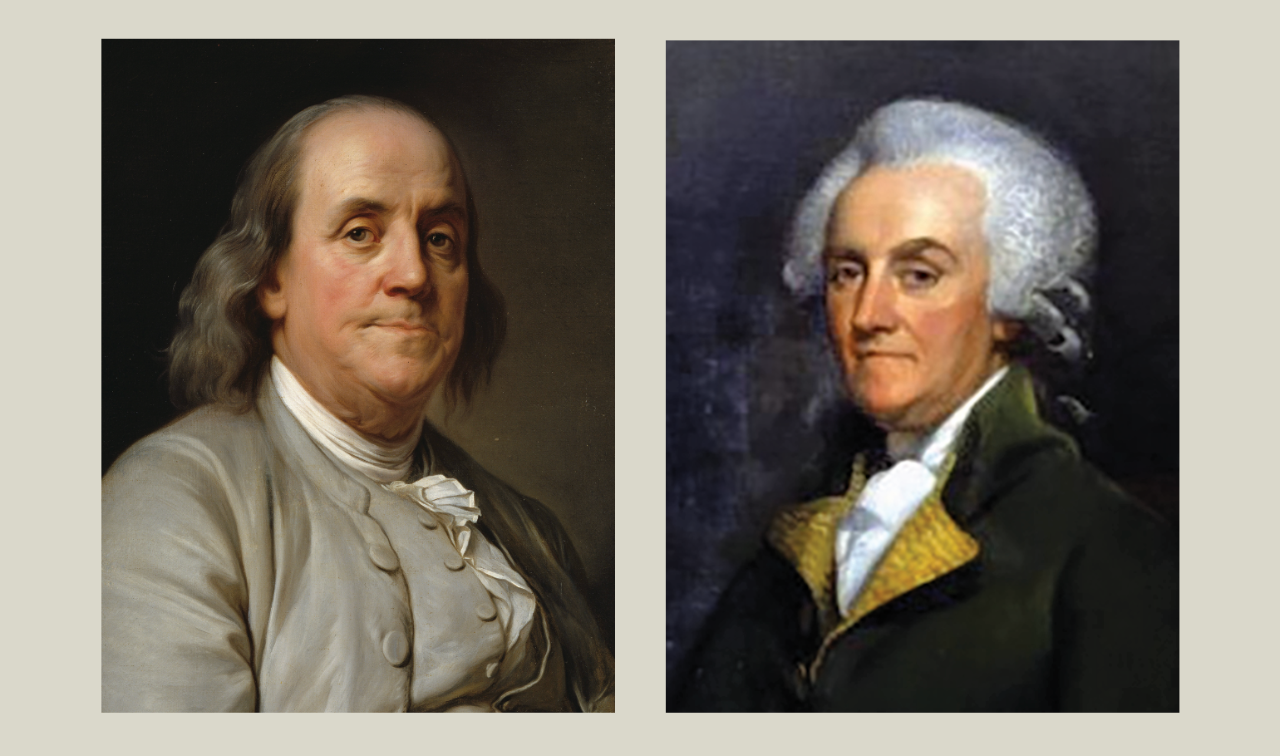
In 1785, a father and son met in Southampton, England. The son, William Franklin, had sent a letter to his estranged father in the hopes of reconciling after years of opposing loyalties in the Revolutionary War.
The father, one Benjamin Franklin, was unmoved. William was no ordinary British subject—he was the last royal governor to carry out King George III’s orders. And Benjamin’s repeated pleas for William to defect to the Patriot were rebuffed.
Now, Benjamin kept the meeting brief and cold, discussing only financial matters. Their relationship never recovered.
The story of the fractured Franklins serves as a microcosm of divided loyalties during the American Revolution. Neighbors fought against neighbors and families were torn apart, creating rifts that often never healed.
Case Study 2: A Patriot Turned Loyalist
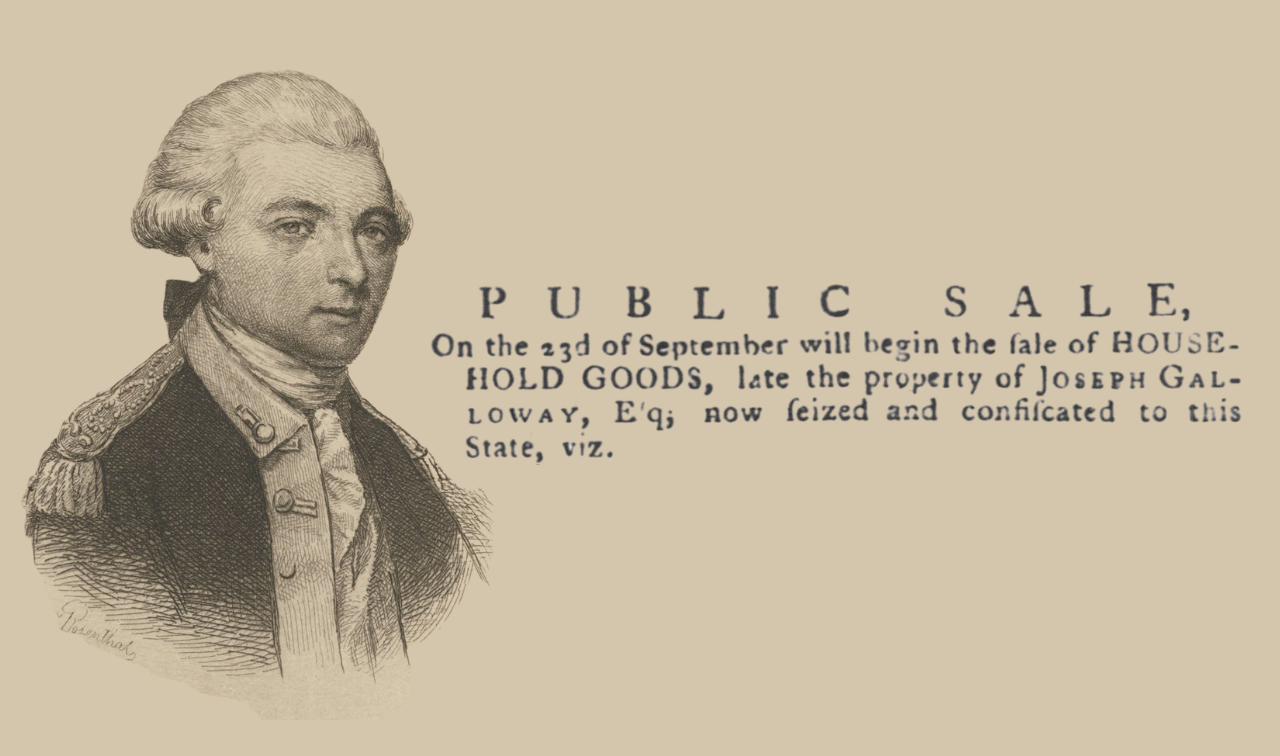
The Revolution split loyalties not just between communities and families, but also within individuals. The life of Joseph Galloway, a statesman from Maryland born in 1731, illustrates the challenges faced by people torn between Patriot and Loyalist sympathies.
A close friend of Benjamin Franklin, Joseph Galloway fought for nearly two decades in the Pennsylvania Provincial Assembly (including as Speaker of the House) on behalf of Colonial rights. But Galloway wanted to redress grievances through the Crown, rather than foment outright resistance against it.
That left him politically stranded when war erupted in 1775. At the First Continental Congress, he proposed a “Plan of Union” that would have created an American parliament within the British Empire. Congress narrowly rejected the plan, but (in a time when middle ground was increasingly hard to find) the very proposal branded him a Loyalist.
Galloway drifted toward Loyalism in the years that followed, collaborating with his British occupiers in New York and Philadelphia. He ultimately sailed for England in 1778, never to return. By September of that year, his home and personal property were seized, then auctioned off at a public sale.
Years later, Galloway filed with the Loyalist Claims Commission to compensate his losses on behalf of the Crown. His case files include a remarkably detailed account of his possessions and financial circumstances.
Galloway died in England in 1803. The man who had once championed Colonial rights spent the last 25 years of his life in exile.
Loyalist sentiment didn’t end with the Treaty of Paris, nor with their diaspora across British North America. A generation later, the War of 1812 (sometimes called America’s “Second War of Independence”) reopened many old divisions into sharp and painful focus. The children of United Empire Loyalists once again took up arms against the United States, now defending the communities their parents built while exiled.
Far from historical footnotes, Loyalists left behind a legacy that reshaped nations on both sides of the Atlantic. The thousands of everyday people who opposed independence deserve to be remembered—not judged, but understood within the Revolution’s complex landscape.
A version of this article appeared in the May/June 2026 issue of Family Tree Magazine.
Related Reads