

Women have been transforming the world for millennia, across many different disciplines. Some created beautiful artwork that still graces museums and family rooms today. Others led earth-shattering social movements and set new records. In any case, these women deserve to be acknowledged for their contributions to the world.
Chances are high that you have some remarkable women in your own family as well. Even if they didn’t discover a cure for a common ailment or break a world record, they have endured, thrived and set a course for the generations that follow them. Celebrate the women in your family throughout history by reading about these trail-blazing women.
Learn more about some historical women and contemporary newsmakers that continue to impact the world at:
- National Women’s History Museum’s Biographies portal
- Biography.com
- National Archives’ Women’s History page
- Library of Congress’ American Women History resource guide
In This Article:
- Activists
- Artists
- Authors
- Journalists
- Medicine and Science
- Politicians
- Sports
- More Inspirational and Notable Women
Activists
Abigail Adams (1744–1818)

Born Abigail Smith, Abigail Adams was not only an early advocate for women’s rights, but a confidant and advisor to her husband President John Adams (the second president of the U.S.). She opposed slavery and supported women’s education.
In a 1776 letter, future First Lady Abigail Adams encouraged her husband, John Adams, then a member of the Continental Congress, to “Remember the ladies … [we] will not hold ourselves bound by any laws in which we have no voice or representation.”
Eleanor Roosevelt (1884–1962)
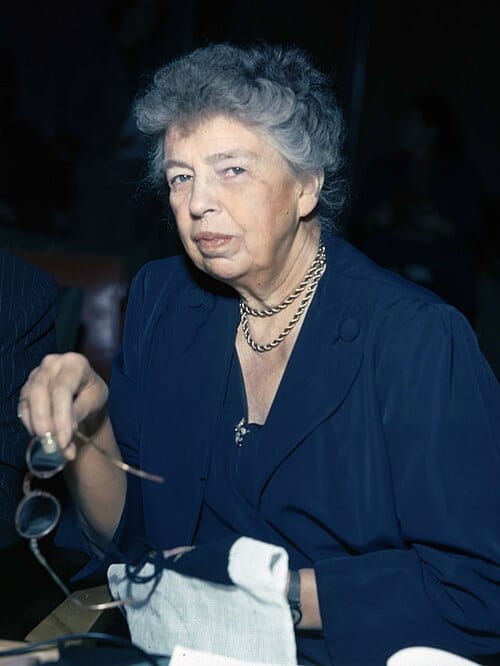
The “First Lady of the World,” Eleanor Roosevelt, used her platform as the First Lady of the U.S. and member of the prominent Roosevelt family to advocate for human and civil rights. She redefined the First Lady’s role in the White House and served as the first chair of the United Nations Commission on Human Rights. After the passage of women’s suffrage, she promoted women’s political engagement. She also championed racial justice, advocating for the NAACP and the National Urban League.
Mary McLeod Bethune (1875–1955)

Mary McLeod Bethune was the daughter of former slaves and the only one of 17 siblings her family could send to school. She became one of the most important Black educators, civil and women’s rights leaders, and government officials of the 20th century. Her belief in the power of education led her to become a teacher and found the Daytona Normal and Industrial Institute (now Bethune-Cookman University).
Among her vast amount of work includes founding many organizations to fight for racial and gender equality and leading voter registration drives after women gained the right to vote in 1920. She was elected president of the National Association of Colored Women’s Clubs in 1924 and became the founding president of the National Council of Negro Women in 1935. As a friend of Eleanor Roosevelt, in 1936, Bethune became the highest ranking African American woman in the government when President Franklin Delano Roosevelt named her as the director of Negro Affairs and the National Youth Administration, which she served in until 1944. Bethune was an advisor to President Franklin Delano Roosevelt, giving African Americans an advocate in the government. In 1940, she became the vice president of the National Association for the Advancement of Colored Persons (NAACP). Bethune was the only woman of color at the founding conference of the United Nations in 1945.
Additionally, Bethune was a businesswoman and co-owned a Daytona, Florida resort and co-founded an insurance company in Tampa. She was also a prolific writer. She was honored with many awards, including being inducted into the National Women’s Hall of Fame in 1973. On the anniversary of her 99th birthday, the Mary McLeod Bethune Memorial was erected in her honor in Lincoln Park (Washington, D.C.), making her the first African American and first woman to have a memorial installed in a public park in the District of Columbia. The inscription of the pedestal reads, “let her works praise her.”
Rosa Parks (1913–2005)
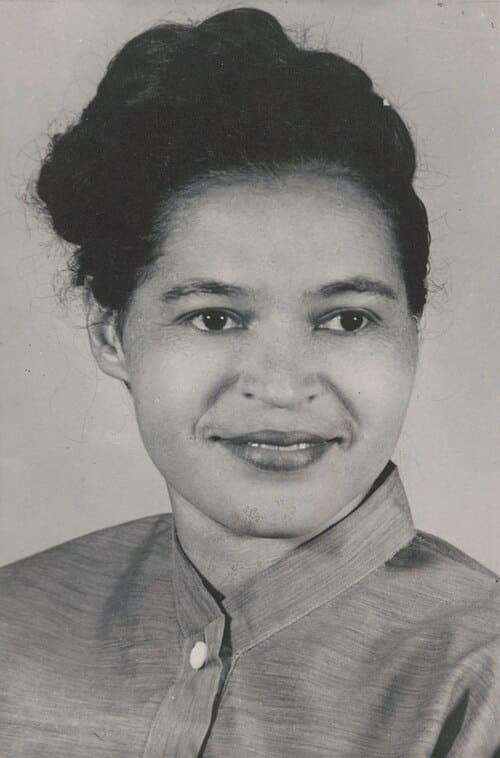
Rosa Parks created a spark in the civil rights movement when she boarded a bus in Montgomery, Alabama on 1 December 1955 and refused to give up her seat for a white passenger. Her resistance sparked one of the largest social movements in history: the Montgomery Bus Boycott. By the time she boarded the bus in 1955, Parks was already an established organizer and leader in the civil rights movement in Alabama, and helped organize the subsequent boycott. The boycott became a major factor in the end to legal segregation. Parks continued her activism into her later years, working in Detroit’s Civil Rights Movement and as an active member in several organizations that worked to end inequality in the city.
Sojourner Truth (1797–1883)

Sojourner Truth was a prominent Black abolitionist and women’s rights activist, and is best known for her powerful speeches, including “Ain’t I a Woman?” Arguing for equal rights for women at an 1851 convention in Akron, Ohio, the former slave Sojourner Truth declared: “Look at me! Look at my arm! I have ploughed and planted, and gathered into barns, and no man could head me! And ain’t I a woman?”
Born Isabella Bomfree in 1787, she grew up enslaved by multiple owners. She was born in Dutch-speaking Ulster county, New York and spoke only Dutch as a child. Even though she never received a formal education, she became one of the best known speakers of her time. She fled enslavement in 1826, finding refuge in New Paltz, New York with the Van Wagenen abolitionist family. To mark the new chapter of her life, she changed her last name to Van Wagenen. With the support of the Van Wagenens, Truth sued her former enslaver for the return of her five year-old son, Peter. After a year-long legal battle, a judge of the Ulster County, New York Courthouse ruled in her favor, making her the first Black woman to sue a White man and win.
In the 1830s, she moved to New York City and formed connections with Black community leaders and became active in abolition, women’s rights and pacifism. Her connection with this community strengthened her religious convictions and, in 1843, she renamed herself Sojourner Truth, saying that the Spirit had called her to preach the truth.
She became involved in numerous activist groups and dictated her autobiography The Narrative of Sojourner Truth (1850). By the beginning of the Civil War, Truth had moved to Michigan, where she helped recruit young Black men to join the Union cause and organized supplies for Black troops. Though she was still a pacifist, Truth viewed the Civil War as “a fair punishment from God for the crime of slavery.” After the war, in 1864, she was invited to the White House by President Abraham Lincoln.
Truth became involved with the National Freedmen’s Bureau Relief Association. She also lobbied against segregation in Washington, D.C. and advocated for land grants for free Black Americans. In her later years, she met President Ulysses S. Grant and worked on his reelection campaign. In 1872, she tried to vote in the presidential election, but was turned away.
In 1970, the State University of New York at New Paltz renamed their university library to the Sojourner Truth Library. In 2009, she became the first Black woman to be represented in the U.S. Capitol.
Victoria Woodhull (1838–1927)
Victoria Claflin Woodhull, later Victoria Woodhull Martin, was an American leader in the woman’s suffrage movement, spiritualist, and financier. She was viewed as radical at the time for advocating for the eight-hour workday, a progressive income tax, profit sharing and social welfare programs. In 1872, she ran became the first woman to run for president of the United States. Victoria was also the first female stock broker on Wall Street.
Victoria made history in 1871 when she became the first woman to testify in front of a committee of the U.S. House of Representatives. She was joined by Susan B. Anthony and Isabella Beecher Hooker, arguing that American woman already had the right to vote under the 14th and 15th Amendments. She again made history in 1872 when she became the first woman to run for president of the United States. Her running mate, unbeknownst to him, was Frederick Douglass. She advocated, among many other things, that women have the right to marry who they want to and the right to divorce their husbands.
Woodhull and her sister, Tennessee Claflin, became the first female stockbrokers on Wall Street when they opened a brokerage firm in 1870. She made a fortune on Wall Street by advising clients like Vanderbilt. The New York Herald called Woodhull and Claflin the “Queens of Finance.”
Woodhull was inducted into the National Women’s Hall of Fame in 2001.
Artists
Frida Kahlo (1907–1954)

Known for her self-portraits, Frida Kahlo was an internationally celebrated artist who drew inspiration from her Mexican culture. Initially, she enrolled in medical school, however, after a debilitating bus accident, she turned to painting and used the medium to depict her experience of chronic pain. In her early artistic career, Kahlo was influenced by the political climate in Mexico, which was in the midst of a cultural revolution in the 1920s. She was one of the first artists to candidly depict female experiences like birth, miscarriage, breastfeeding and trauma, including in her self-portraits.
Kahlo’s work remained relatively unknown until the late 1970s when her work was rediscovered by political activists and art historians. By the early 1990s, she became not only a recognized figure in art history, but a prominent icon for feminists, Chicanos and the LGBTQ+ community. Her 1940 self-portrait, The Dream (The Bed), remains the most expensive work by a female artist ever auctioned at $54.7 million.
Maud Wagner (1877–1961)

Maud Wagner was the first well-known female tattooist in the United States. She also taught her daughters how to tattoo. Born in Emporia, Kansas, Wagner became an American circus performer and worked in numerous traveling circuses as an aerialist and contortionist. She started her work as an aerialist at the Louisiana Purchase Exposition (World’s Fair) in 1904.
Authors
Laura Ingalls Wilder (1867–1957)
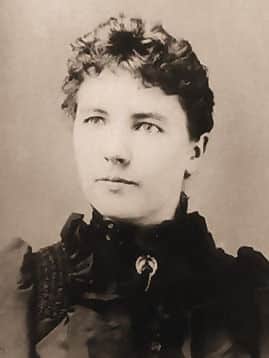
Author Laura Elizabeth Ingalls Wilder detailed everyday life as a pioneer in the American West, and the books that document her life continue to inspire young girls. In addition to her authorship, Wilder is referred to by some historians as one of America’s first libertarians. She supported women’s rights and education reform. She also became infamous for a short period for shaking the hand of an African-American man in segregated Missouri. Wilder was also an advocate for several regional farm associations near Mansfield, Missouri, and a recognized authority in poultry farming and rural living. This led her to speaking on invitation to groups around the region.
Wilder was a five times runner-up for the annual Newbery Medal. In 1954, the American Library Association inaugurated a lifetime achievement award for children’s writers and illustrators, naming the award for Wilder: “Wilder Medal.” She was the first recipient. Wilder’s Little House on the Prairie book series have been produced for screen and stage several times.
Mourning Dove (1884–1936)

Hum-ishu-ma or Mourning Dove (Christine Quintasket), born on the Colville Indian reservation in 1884, was forced to give up her native language at the mission school she attended. She worked most of her life as a migrant laborer, writing at night. Her 1927 novel Cogewea, The Half-Blood, was among the first to be published by a Native American woman. Her later books include Coyote Stories, legends told by her grandmother and other tribal elders.
Mina Loy (1882–1966)

Mina Loy was an English poet, artist, mother, feminist, playwright and actress. One of the defining members of the Modernist era, she was known for her somewhat frank and shocking poetry that utilized intimate details of her own life. While living in an expatriate community in Florence, Italy, she wrote her Feminist Manifesto.
Journalists
Ida B. Wells (1862–1931)
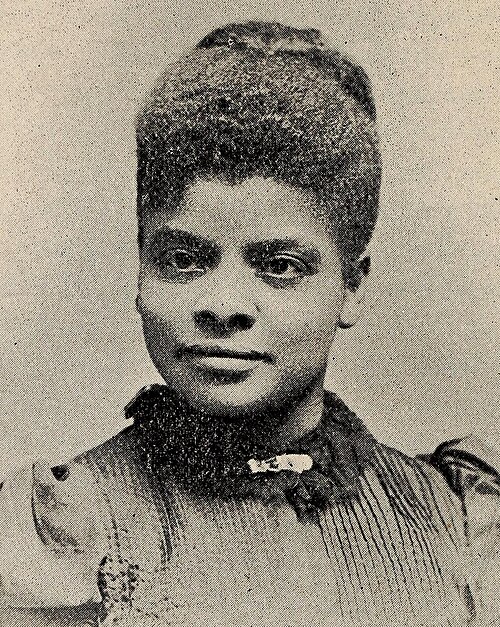
Ida B. Wells-Barnett was an American investigative journalist, educator, sociologist and early leader in the civil rights movement. She was born into slavery in Mississippi and later emancipated along with her parents at the conclusion of the Civil War with the Emancipation Proclamation. A pioneer of investigative journalism, she documented the lynching of African Americans in the United States in the 1880s, authoring A Red Record, which provided the history and statistical data.
She was outspoken regarding her beliefs as a Black female activist and regularly faced public disapproval. Ida also consistently advocated for the rights of women, in addition to Black women and the broader Black community. This often caused friction within some of the white-dominated suffragist organizations. Ida helped found several suffrage organizations for Black women, including the League of Colored Women, the National Association of Colored Women and the Alpha Suffrage Club. She also helped found the National Association for the Advancement of Colored People (NAACP).
Ida was inducted into the National Women’s Hall of Fame in 1988. In July 2018, the Chicago City Council officially renamed Congress Parkway to Ida B. Wells Drive–the first downtown Chicago street to be named after a woman of color.
Margaret Bourke-White (1904–1971)
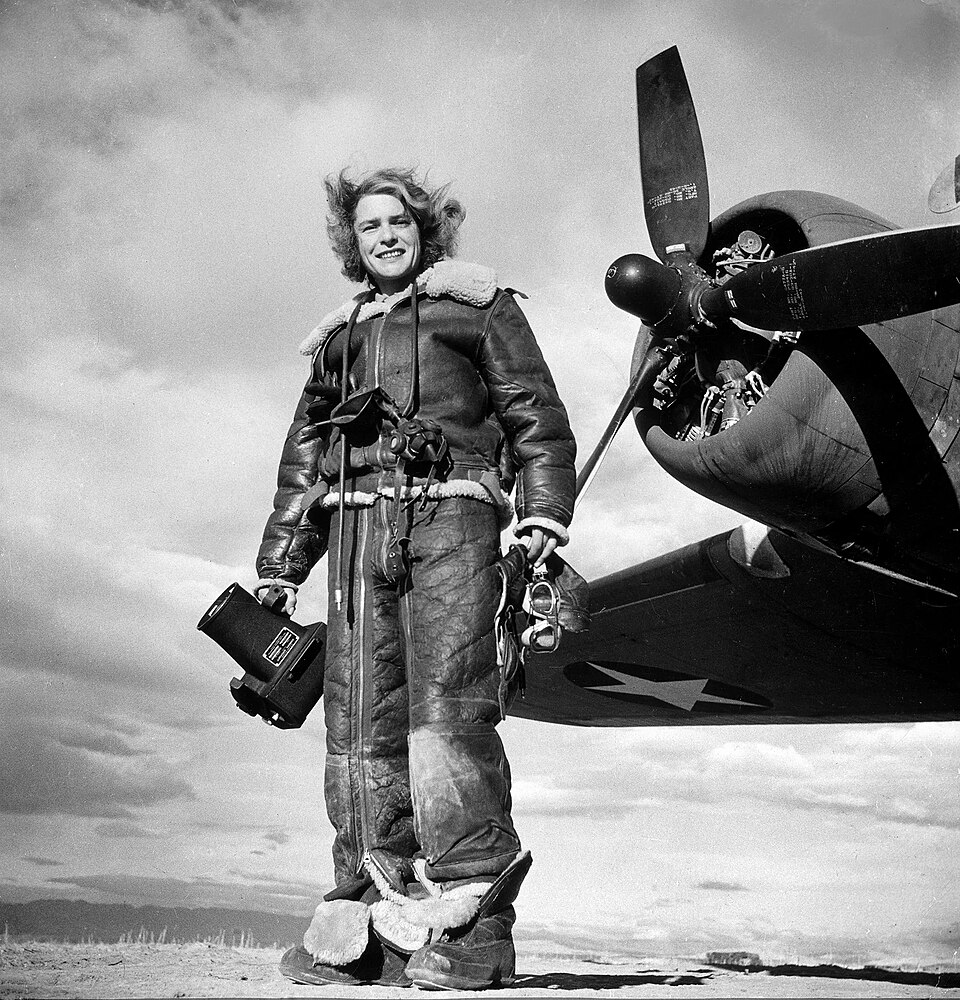
Margaret Bourke-White was an American photojournalist and the first American female war correspondent and photojournalist. For the first hals of her career, she was known as an architectural and commercial photographer. In 1930, she became the first foreign photographer to be permitted to take photographs in the Soviet Union.
The second half of her career is represented in her transition from corporate photography to photojournalism and began with work during the Great Depression. During World War II, she worked in active combat zones photographing the Nazi occupation of Czechoslovakia. She was also with Patton’s Third Army in the spring of 1945 when she documented the liberation of the Buchenwald concentration camp. In 1949, she was one of the first to bring attention to the injustices in South Africa’s apartheid regime. She also covered the Korean War for Life magazine in the early 1950s. She was inducted into the National Women’s Hall of fame in 1990.
Nellie Bly (1864–1922)

Nellie Bly (given name Elizabeth Cochran) was an influential journalist, best known for faking insanity to expose the abusive conditions in a New York asylum as well as for taking a trip around the world in 72 days. Her reporting raised awareness about mental health treatments, as well as led to improvements in residential institutions. She also ushered in the new age of investigative journalism.
After her husband’s death in 1903, she came into control of his business, the Iron Clad Manufacuring Company and American Steel Barrel Company. In business, she her independent spirit continued. She went on to patent several inventions related to oil manufacturing and prioritized the welfare of her employees by providing health care benefits and recreational facilities.
In her later years, she returned to journalism and covered World War I from Europe, as well as continuing to shed light on major issues that impacted women. The acclaimed newspaper editor Arthur Brisbane remembered Nellie at the time of her death as “the best reporter in America.”
Medicine and Science
Ada Lovelace (1815–1852)
Ada Lovelace was an English mathematician and writer who is widely known for her work with Charles Babbage, for whose prototype of a digital computer (the analytical machine) she wrote the first algorithm, creating a program. Because of this, she is known as “the first computer programmer.” Lovelace was the daughter of the famous poet Lord Byron. In her early years, she was tutored by the noted 19th century researcher and scientific author Mary Somerville.
The early programming language “Ada” was named after her. In 1981, the Association for Women in Computing inaugurated its Ada Lovelace Award, and in 1998, the British Computer Society began to award the Lovelace Medal. Numerous colleges and departments in universities have been named for her.
Chien-Shiung Wu (1912–1997)
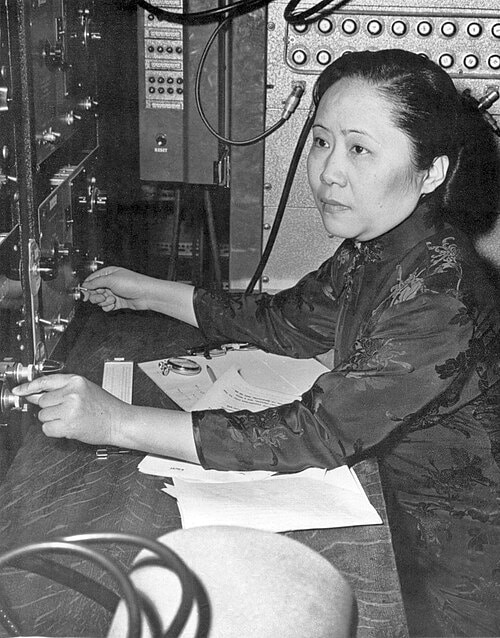
Chien-Shiung Wu, also known as Madame Wu, was a Chinese-American particle and experimental physicist who made significant contributions to the fields of particle and nuclear physics. She earned multiple nicknames during her years as physicist, including “the First Lady of Physics” and “Chinese Marie Curie.” Wu is most known for her work on the top-secret Manhattan Project during World War II and her Cobalt-60 experiment. She won numerous awards and prizes throughout her career, over 15 major awards, as well as honorary degrees. She was also the first woman to serve as the president of the American Physical Society. Wu is regarded as a heroine in her field and as the “greatest female Chinese scientist in the twentieth century.”
Elizabeth Blackwell (1821–1910)
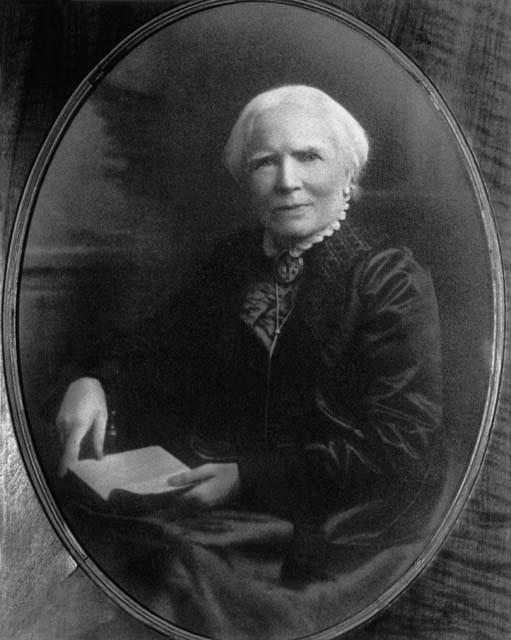
Elizabeth Blackwell, born in England, became the first woman admitted to medical school in the U.S. when she attended Geneva (N.Y.) Medical College in 1847 and the first to receive a medical degree. She graduated at the top of her class. Elizabeth championed women in the medical profession and eventually opened her own medical college for women.
Along with her sister, Dr. Emily Blackwell, she opened the New York Infirmary for Women and Children in 1857. During the Civil War, Elizabeth and Emily trained women as nurses for Union hospitals. After the war, Elizabeth returned to England where she became a professor of gynecology at the London School of Medicine for Women. She also helped found the National Health Society and published several books.
Elizabeth Garrett Anderson (1836–1917)
Elizabeth Garrett Anderson was an English physician, educator, feminist and suffragette. She is widely known to be the first woman to qualify as a physician and surgeon in Britain. She was also the co-founder of the first hospital to be staffed by women, the first woman to be dean of a British medical school, the first female doctor of medicine in France, the first woman in Britain to be elected to a school board, and as the Mayor of Aldeburgh, the first female mayor and magistrate in Britain.
Florence Nightingale (1820–1910)
Florence Nightingale was the founder of modern nursing, as well as an English social reformer and statistician. Often called “the Lady with the Lamp,” she is widely known for making hospitals a cleaner place to be through improved sanitation conditions. Nightingale came to prominence while serving as a manager of nurses that she trained during the Crimean War. In addition to her work in nursing and sanitary reform, she wrote over 170 books, pamphlets and reports of health related issues and on other topics. A prolific writer, she wrote on women’s role in society and theology.
Nightingale was gifted in mathematics and made several contributions to the field of statistics. She became a pioneer in the visual representation of information and statistical graphics, credited with one of the first versions of the pie chart. In 1859, she was elected as the first female member of the Royal Statistical Society and became an honorary member of the American Statistical Association in 1874. Among her numerous colleagues and friends was pioneering computer programmer Ada Lovelace.
Nightingale has been memorialized in many statues, monuments and have four hospitals named after her. Since 1965, International Nurses Day has been celebrated on her birthday.
Her voice has been saved for posterity in a phonograph recording from 1890, preserved in the British Sound Library.
María Messina Greco
An early 1900s midwife in Tampa Bay, Fla., María Messina Greco kept records in her native Sicilian of the 6,734 babies she delivered. Maria Messina Greco was a Sicilian immigrant and midwife. She earned a degree in midwifery at the University of Palermo in Sicily. It is said that she delivered over 2,000 babies before coming to the United States. Her detailed notes, kept in a series of 62 small notebooks (now archived at USF Libraries – Tampa Special Collections Repository) record the 6,734 babies she brought into the world in Tampa beginning as early as 1907. The records are transcribed at Tampapix.com.
Rosalind Franklin (1920–1958)
Rosalind Franklin was an English chemist and X-ray crystallographer whose work was crucial to the understanding of the structure of DNA. Her work was critical to the understanding of the molecular structures of DNA, RNA, coal, graphite and viruses. However, her contributions to the discovery of DNA were unrecognized during her lifetime. Instead, her unpublished research helped James Watson, Francis Crick and Maurice Wilkins (Wilkins being a colleague of Franklin’s) discover the DNA double helix, for which they recieved the Nobel Prize in Physiology or Medicine. As she was largely unrecognized, she has been referred to as the “wronged heroine,” the “dark lady of DNA,” the “forgotten heroine,” the “Sylvia Plath of molecular biology” and a feminist icon. James Watson believed that had Franklin not passed away, she would have been awarded the Nobel Prize in Chemistry.
In 2026, Franklin was announced as one of 72 historical women in STEM whose names have been proposed to be added to the 72 men already engraved on the Eiffel Tower.
Sally Ride (1951–2012)

Sally Ride was the first American woman (and the third woman overall) to go to space, aboard the Challenger space shuttle on 18 June 1983. She made her first trip when she was just 32 years old, making her the youngest person to go to space at the time. Much later, she was acknowledged as the first gay astronaut after her passing when her long time partner, Tam O’Shaughnessy, opened up about their relationship. Sally was passionate about improving science education and helping young women and girls in science, technology, engineering and math (STEM). She wrote several children’s books about space exploration and, with her partner O’Shaughnessy, established the Sally Ride Science nonprofit organization that encourages children from every background to take interest in STEM.
Politicians
Queen Elizabeth Windsor II (1926–2022)

Queen Elizabeth II was the queen and matriarch of the United Kingdom from 1952 until her death in September 2022. She was the longest reigning woman in history and role model for women around the world. She made history by, despite her royal lineage, insisting on being allowed to serve as an auxiliary mechanic and truck driver in World War II. Read this old newspaper article to discover more about her WWII activities.
Queen Elizabeth II also modernized the monarchy, including equalizing succession rights for women. She also showed the world that women can be leaders while also raising a family. She swore in 15 British prime ministers, three of them women.
Frances Perkins (1880–1965)

Frances Perkins, an American sociologist and worker-rights advocate, was the first woman appointed to the US cabinet, serving as the US Secretary of Labor from 1933 to 1945 under President Franklin D. Roosevelt. She played a central role to creating and implementing New Deal policies, including minimum wage laws, labor protections and Social Security. She fought for workers’ rights, progressive reform and women’s suffrage throughout her whole life, reshaping American labor and social welfare.
Early in her career, she worked at Hull House (Chicago) with Jane Addams. She also witnessed the Triangle Shirtwaist Factory Fire in New York, which spurred her to become the chief investigator for the New York State Factory Investigating Commission. As the first woman in the U.S. cabinet, she oversaw (among many things) the implementation of Social Security and the Civilian Conservation Corps (CCC) and Public Works Administration (PWA).
After Roosevelt’s death in 1945, President Truman appointed Perkins to the US Civil Service Commission, where she served until 1953. She is honored with a U.S. Department of Labor building named after her, a national monument, a postage stamp and has been inducted into the National Women’s Hall of Fame.
Kamala Harris (1964-)
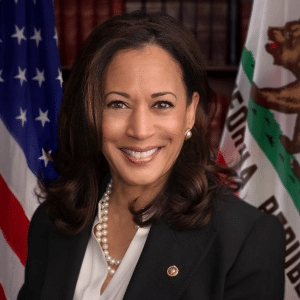
On 20 January 2021, Kamala Harris became the first woman, first African American woman, the first Indian-American, the first person of Asian-American descent and the first graduate of a HBCU (Historically Black Colleges and Universities) to be sworn in as the Vice President of the United States. In her election acceptance speech, Harris said that she “may be the first, but [she] will not be the last.” In 2024, she became the first Black woman and first Asian-American woman to become a major political party’s presidential nominee.
Sandra Day O’Connor (1930–2023)

Sandra Day O’Connor was the first female Supreme Court Justice of the United States. She served as an associate justice on the Supreme Court from 1981 to her retirement in 2006. She paved the way forward for women in law and politics: from dealing with the indignities of having to take an unpaid job right out of law school and facing the lack of a women’s restroom at the Supreme Court when she was appointed, to becoming the first woman elected as a State majority leader from either political party in 1973.
Sports
Annie Oakley (1860–1926)

Sharpshooter Annie Oakley traveled the world as part of Buffalo Bill’s Wild West show, performing such feats as shooting the ashes off a cigarette held by Kaiser Wilhelm II of Germany. Her life story inspired the Broadway musical Annie Get Your Gun. She became a star in a male-dominated sport and a legend throughout the world.
Jackie Mitchell (1931–1987)
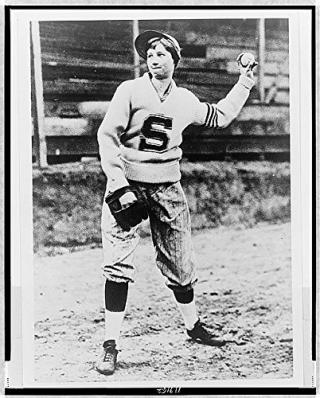
Pitcher Jackie Mitchell was one of the first female American pitches in professional baseball history. She signed with the Chattanooga Lookouts minor league baseball team in 1931, mostly as part of a manager’s publicity stunt. In an exhibition game against the New York Yankees, the 17-year-old left-hander struck out Babe Ruth and Lou Gehrig in succession, in seven pitches. A musical about her life, Unbelievable, was debut on stage in March 2017.
More Inspirational and Notable Women
Anna Vanness Siple

Former online editor for Family Tree Magazine, Vanessa Wieland, says: “My great-great-aunt Anna Vanness Siple’s aunting skills are so legendary that she continues to inspire the women in our family to be as wise and indulgent as she was. My grandmother named both my mother and me after her.”
Annie Moore (1874–1924)
Anna Moore, known as “Annie,” was the first immigrant to the United States to pass through Ellis Island. She arrived at Ellis Island from Ireland aboard the Nevada with her two brothers, Anthony and Philip, on 1 January 1892. As the first person to pass inspection at the new facility, an American official presented her with a $10 American gold piece. Moore’s parents, Matthew and Julia, had come to the United States in 1888. Annie later married a son of German immigrants and had 11 children, five of whom survived to adulthood.
Annie is honored by two statues sculpted by Jeanne Rynhart. One stands near Cobh Heritage Centre, her port of departure, and the other is at Ellis Island. Her life also inspired the song “Isle of Hope, Isle of Tears,” written by Brendan Graham after visiting Ellis Island.
Mrs. Catherine O’Leary (1827–1895)

Mrs. Catherine O’Leary is the Irish immigrant who legend blames for allowing the cow she was milking to kick over a lantern, starting the Great Chicago Fire of 1871. Historians lay the blame elsewhere, and the Chicago City Council exonerated Mrs. O’Leary in 1997.
Deborah Sampson (1760–1827)
Born in Plympton, Massachusetts, Deborah Sampson was one of seven children to Jonathan Sampson Jr. and Deborah Bradford Sampson. After the death of her father, Deborah was bound out as an indentured servant to Deacon Benjamin Thomas in Middleborough. At the age of 18, when her indenture was complete, Sampson, who was self-educated, worked as a teacher during the summer and a weaver in the winter.
In 1782, as the Revolutionary War raged on, Sampson disguised herself as a man named Robert Shurtleff and joined the 4th Massachusetts Regiment, assigned to Captain George Webb’s Company of Light Infantry. For over two years, Sampson hid her true sex, despite several close calls. She even extracted a pistol ball from her own thigh when she was shot. However, she was ultimately discovered when she became ill during an epidemic.
Sampson received an honorable discharge on 23 October 1783 and returned to Massachusetts. She later married and had three children. While her life after her service was relatively typical of a farmer’s wife, she did go on a year long lecture tour about her experiences in 1802–making her the first woman in America to do so. She did so sometimes dressed in full military regalia.
After her death, her husband petitioned Congress for the pay as the spouse of a soldier. In 1837, the committee concluded that the history of the Revolution, “furnished no other similar example of female heroism, fidelity and courage” and awarded him the money, making Deborah Sampson the only woman to earn a full military pension for participation in the Revolutionary army.
Florence Owens Thompson (1903–1983)

Florence Owens Thompson (the “Migrant Mother”) was 32 years old when Dorothea Lange photographed her and her children for the Farm Security Administration in March 1936, in a pea picker’s camp in Nipomo, Calif. Lange later said that Thompson had sold her car’s tires to buy food for her family.
Through Lange’s photograph, “Migrant Mother,” Thompson became the face of the Great Depression. The Library of Congress titled the image “Destitute pea pickers in California. Mother of seven children. Age thirty-two. Nipomo, California.” Thompson was called the “Mona Lisa of the 1930s.” Both of Thompson’s parents claimed Cherokee descent.
In a 2008 interview with CNN, one of Thompson’s daughters, Katherine McIntosh, recalled memories of her mother as being “a very strong lady” and “the backbone of our family.” McIntosh also recalled, “We never had a lot, but she always made sure we had something. She didn’t eat sometimes, but she made sure us children ate. That’s one thing she did do.”
Francisca Ladenkotter

Family Tree Magazine former Editor Diane Haddad’s great-great-grandmother Francisca Catherina Ladenkotter raised seven children with her husband in Cincinnati. Ladenkotter was born to German immigrants and had a hard life, with two of her children dying in infancy.
Gwenllian Evans (c. 1802–1892)
Gwenllian Evans, a widow from Wales, was Montana’s first female homesteader. She emigrated to the U.S. in 1868 and filed for her land in 1870, receiving it in 1872. The land later became the town of Opportunity. She was also one of the territory’s first post mistresses. She lived on her homestead until her death in 1892. Read more about Gwenllian in “A Farm of Her Own.”
H. Greene
While we don’t have a picture of her, a woman named H. Greene kept a diary in 1886 and 1887 that reveals her life seeing to the domestic and farming work on her parents’ Ohio property after they passed away. You can read it on the Harvard University Open Library website.
Kady Brownell (1842–1915)

Kady Brownell served as a vivandière who helped the Union Army during the Civil War. She went with her husband when he joined the 1st Rhode Island Detached Militia regiment. Col. Ambrose Burnside named her Daughter of the Regiment and color bearer. She participated in the First Battle of Bull Run in 1861. After re-enlisting with her husband in the 5th Rhode Island Infantry, she served in the Battle of New Bern in 1862, where she was more than just a color bearer, but saved the lives of a number of soldiers. Kady is the only woman to have received Union Army discharge papers.
Laurene Markert Springer

Family Tree Magazine Facebook friend Mary Kay Springer’s mother, Laurene Markert Springer (left), enlisted in the Nurses Corp after graduating from the Sacred Heart School of Nursing in Spokane, Wa. She’s shown here during basic training at Fort Lewis (Tacoma, Wa.) in 1944.
Leola N. King

Leola N. King was America’s first female traffic cop, serving in Washington D.C. in the early 20th century. She broke barriers at the time when law enforcement was a male dominated field.
Lydia Chapin Taft (1712–1778)
According to legend, Lydia Chapin Taft was the first woman known to legally vote in America, during a town meeting in 1756 in Uxbridge, Mass. She voted in place of her deceased husband and son.
Sacagawea (c. 1788–1812)
Sacagawea, also spelled Sakakawea or Sacajawea) was a Hidatsa or Lemhi Shoshone woman who helped the Lewis and Clark Expedition in her early teens. The National American Woman Suffrage Association adopted her as a symbol of women’s worth and independence. She helped the Expedition achieve their mission objectives by exploring the Louisiana Territory, traveling thousands of miles from North Dakota to the Pacific ocean, and establishing contacts with Native American people while also contributing to the expedition’s knowledge of natural history.
Historical documentation of Sacagawea is very limited. She was mentioned 108 times in Lewis and Clark’s journals, often in passing. While her death date is generally accepted as 1812, there has been recent scholarship that identified significant issues with the documentary evidence. The Sacagawea Project Board’s book Our Story of Eagle Woman, presents several challenges to the accepted narratives. Hidatsa oral tradition maintains that Sacagawea was a member of their tribe who lived until 1869. Shoshone tradition maintains that she was alive during a treaty negotiation in 1868.
In 1959, Sacagawea was inducted into the Hall of Great Westerners of the National Cowboy & Western Heritage Museum. She was inducted into the National Cowgirl Museum and Hall of Fame in 1976 and the National Women’s Hall of Fame in 2003. In 2001, President Bill Clinton gave her the title of Honorary Sergeant of the Regular Army. The Dinner Party, an artwork installation by feminist artist Judy Chicago, features a place setting for Sacagawea in Wing Three, which is part of the American Revolution to the Women’s Revolution.
Sybil Ludington (1761–1839)
Sybil Ludington was an alleged heroine of the American Revolution and daughter of the Patior colonel Henry Ludington. According to family legend, 16-year-old Sybil Ludington rode 40 miles on horseback to warn Patriots in the Danbury, Conn., area of incoming British forces during the Revolutionary War. Her midnight ride was twice as long as that of Paul Revere, and modern accounts say that she received praise from George Washington himself.
Trieu Thi Trinh (Lady Triệu)

The “Vietnamese Joan of Arc,” Trieu Thi Trinh raised an army to fight against Chinese occupiers in the 3rd century. She is quoted as saying, “I want to ride storms, kill orcas in the open sea, drive out the aggressors, reconquer the country and undo the ties of serfdom, not to bend my back to be the concubine of whatever man.”
A similar article was published online in March 2018. It was rewritten and updated in March 2026
Related Reads


Author

Katharine Korte Andrew MS/LIS is a digital editor for Family Tree Magazine and professional genealogist.


