We usually think of pirates as caricatures: rum in barrels, parrots on their shoulder, a jar of dirt on deck and treasure maps in hand. However, the truth is f-“arr” less cinematic.
The real history is both messier and more interesting. Historical pirates were not rum-slinging rebels; instead, they were often people displaced by war and economic instability who turned to an occupation that paid well—specifically because it disrupted the people making the money in the legal way through trade.
In this article, we’ll focus on the pirates of the Caribbean, the Atlantic coast of North America, and the rivers and Great Lakes of the United States. And regardless of how you pronounce Caribbean, there were plenty of pirates there.
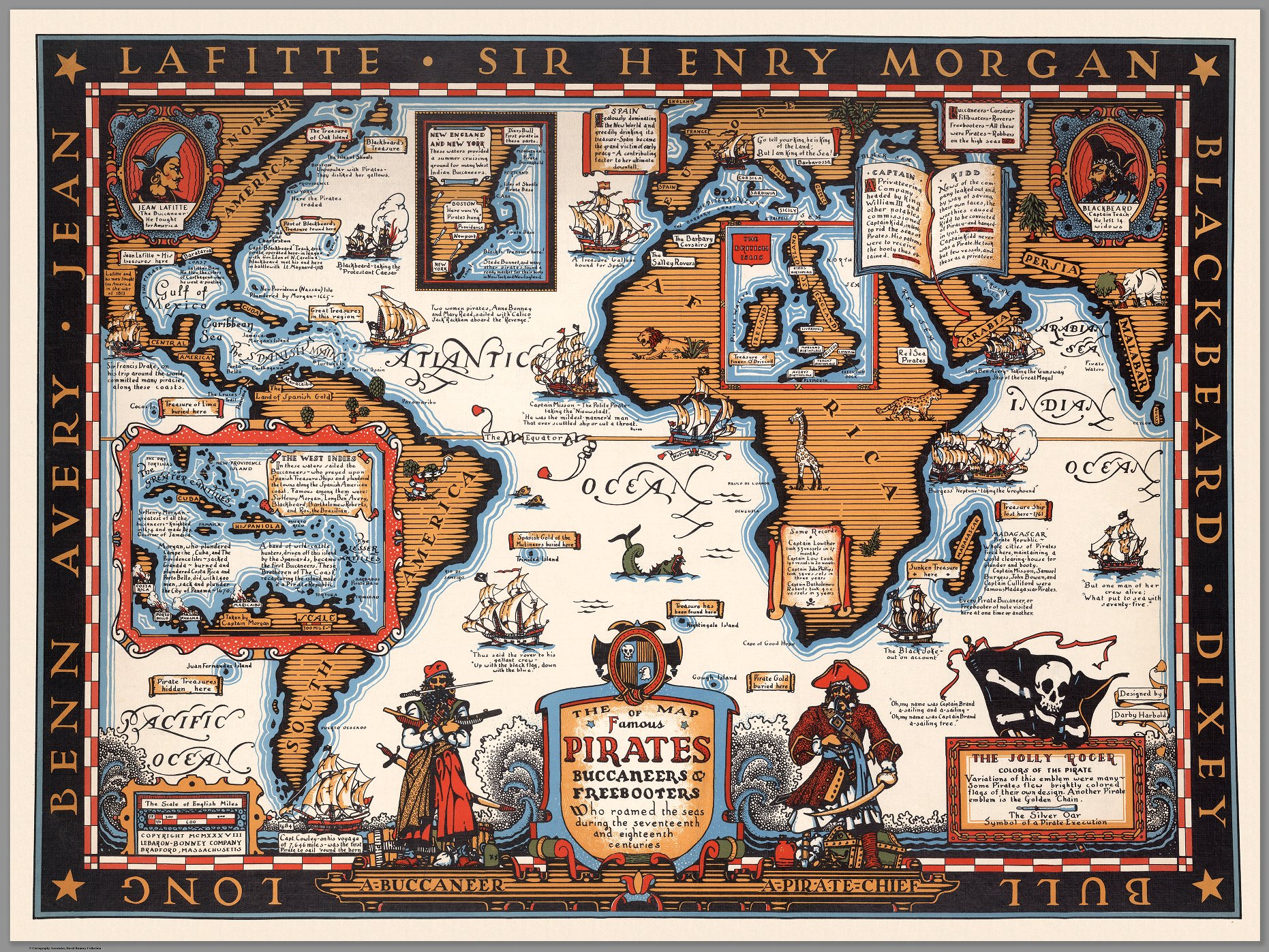
The period now known as the “Golden Age of Piracy” lasted roughly from the mid-1600s to the 1720s. Pirates operated from the Caribbean to the eastern coast of North America, across the Atlantic to West Africa and into the Indian Ocean. The Smithsonian estimates that, in about 1720, roughly 2,000 pirates were actively engaged in attacking Atlantic shipping.
What’s the Difference Between a Pirate and a Privateer: A Thin (and Legally Convenient) Line
When talking about piracy in the Caribbean and North America, it’s important to start with the basic definition of a pirate. After all, pirates and “privateers” often look identical, right up until someone pulled out the paperwork.
A pirate robbed ships or coastal settlements without having lawful authorization. A privateer, on the other hand, operated under a government-issued Letter of Marque, which was basically an official note that said, “Please disrupt the enemy’s shipping, but do so on behalf of the government and with our blessing.”
During wartime, a government could authorize a privately owned, armed vessel to disrupt trade by capturing ships that belonged to an enemy. Captured vessels and cargo, often called prizes, were generally brought before a court to determine if the capture was legal before the proceeds were sold at auction. Proceeds went to the privateersmen. (“Pirates, Privateers, and Civil War Maritime Laws”).
The distinction between pirate and privateer matters. A successful privateer might come home richer and respected. But someone doing essentially the same thing without the right paperwork could be hanged for piracy.
Even the US Constitution preserves the distinction between piracy and privateers. Article I, Section 8 gives Congress the power to both define and punish piracy, as well as to grant letters of marque and reprisal.
In practice, however, things got blurry. Governments issued commissions during wars and sometimes turned a blind eye when their privateers stretched the rules. And privateers who were given a commission during a war may have continued raiding after it ended—or attacked ships from neutral countries. Others claimed commissions from governments that lacked international recognition.
In short: One nation’s privateer could very easily appear in another nation’s records as a pirate.
What is a Buccaneer?
“Buccaneer” is another term frequently used interchangeably with pirate, but it originally described mostly English, Dutch and French adventurers that operated in and around the 17th-century Caribbean islands. Many buccaneers drifted back and forth between sanctioned privateering and outright piracy, depending on which countries were at war and who was willing to give them commission. The Library of Congress describes buccaneers as “a cross between genuine privateers, commissioned to defend a country’s colonies and trade, and outright pirates.”
That vagueness is important because piracy wasn’t ever completely separate from colonial government, warfare and trade. Sometimes, governments hunted pirates. Other times, they essentially hired the same people.
Why Did People Become Pirates?: Following the Money
The Caribbean became prime pirating territory for a very practical reason: An enormous amount of wealth moved through it.
Spain’s American empire depended on maritime routes that connected colonies with Europe. Spanish treasure fleets carried silver, gold and other goods across the Atlantic; ships from other European countries brought manufactured goods and supplies west. As these cargoes increased in size and value, they became tempting targets for foreign navies—plus privateers and pirates.
English attacks on Spanish shipping were already common in the 16th century. In fact, during Elizabeth I’s reign, men operating with varying degrees of royal approval attacked Spanish vessels and possessions throughout the Atlantic world. These buccaneers and adventurers enlisted by Elizabeth I were known as “Sea Dogs.”
Privateering even became connected to England’s earliest colonization efforts in North America. The investors and organizers behind the Roanoke voyages, for example, considered the colony to be a useful base against Spanish shipping.
By the 17th century, buccaneers had established themselves throughout the Caribbean. They struck ships, raided coastal settlements, and sometimes participated in large military-style expeditions. Alexander Exquemelin’s Buccaneers of America, first published in 1678, became one of the most important contemporary accounts of their activities.
Piracy flourished especially well whenever a war ended. During conflicts like Queen Anne’s War (1702–1713), Britain and other European powers employed many private sailors to attack enemy commerce. When peace came, experienced sailors suddenly found themselves without wartime employment. Some simply kept doing what they already knew how to do—only now, without legal permission.
The end of Queen Anne’s War helped set the stage for the explosive period of piracy associated with Blackbeard (Edward Teach), Benjamin Hornigold, Charles Vane, “Calico Jack” Rackham and others.
In fact, Edward Teach likely served as a privateer in Queen Anne’s War before turning to piracy. While his career as a pirate captain is estimated to have only lasted about two years, he gained a reputation as one of the most fearsome pirates of all time–even today.
Nassau in the Bahamas became one of the most famous bases for pirates. With a weak government, a useful harbor and nearby shipping lanes, the city that sat on New Providence island attracted hundreds of pirates. British authority returned in force in 1718 when Woodes Rogers arrived as a royal governor with orders to suppress piracy and offer pardons for pirates willing to surrender. Some accepted, but others, like Charles Vane, did not.
When Was the Golden Age of Piracy, and How Long Did It Last?: Shorter Than Its Reputation
The popular image of piracy draws heavily from a narrow stretch of history: the “Golden Age of Privacy” that lasted from the mid-1600s to the 1720s.
Edward Teach: The Real Blackbeard
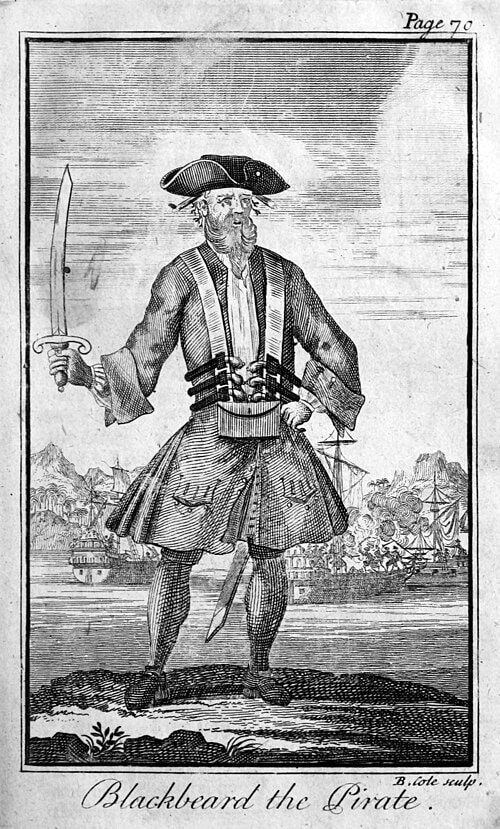
Blackbeard’s documented career as an independent pirate lasted only about a year or two. His real name is technically not even certain. Sources usually call him Edward Teach, Thatch or a variation of the two. Regardless, by late 1717, he was operating along the Atlantic Coast and Caribbean and rapidly gaining a reputation.
Blackbeard’s most famous ship also shows how deeply pirate history is connected to the larger history of the Atlantic economy. In the fall of 1717, Blackbeard captured the French Vessel Le Concorde near Martinique and renamed it Queen Anne’s Revenge. La Concorde was a slave ship and had transported more than 1,200 African captives, and hundreds of enslaved people were aboard when Blackbeard captured it.
The following year, Blackbeard’s flotilla blockaded Charleston, S.C., capturing vessels as they entered or left the port and holding passengers hostage until the pirates received supplies and medicine. Blackbeard later operated around North Carolina before a force sent from Virginia killed him near Ocracoke in November 1718.
The End of an Era: Prosecuting Pirates
Blackbeard was hardly alone. Pirates prowled the sea near Virginia, the Carolinas, Pennsylvania, New York and New England. Some colonial merchants even quietly traded with them, especially when pirates offered imported goods at lower prices.
This uneasy relationship changed as piracy increasingly interfered with legitimate commerce and colonial governments came under greater pressure to suppress it. And the resulting crackdown on piracy was violent.
Pirate Stede Bonnet and members of his crew were tried in Charleston in 1718. Bonnet was hanged in December of that year. “Calico Joe” Rackham and most of his crew were convicted in Jamaica in 1720. Two members of Rackham’s crew, Anne Bonny and Mary Read, were also convicted, but their executions were both postponed after each said she was pregnant. (Yes, there were women pirates, too.) Read died in prison, but Bonny’s fate is much less certain than stories of her implied.
By the middle of the 1720s, executions, pardons, naval patrols and stronger colonial governments had dramatically reduced Atlantic piracy.
Who were People Before They Became Pirates?
For all the stories about adventurers and aristocrats gone rogue, the typical Golden Age pirate was much more likely to have already made his living at sea. Pirates needed people who knew how to sail, navigate, repair ships and handle rigging. Experienced merchant sailors, fishermen, naval sailors and former privateers made natural recruits.
Historian Marcus Rediker describes them as “men of the sea, not wronged aristocrats avenging their lost honor, as Hollywood would have us believe.” Research suggests that around 1720, pirates aged from about 14 to 50, most in their late 20s. About half the pirates active in the Golden Age were English; roughly a quarter came from the West Indies and Britain’s North American colonies, including those who sailed out of Boston, Rhode Island, New York and Charleston.
There were exceptions, of course. Stede Bonnet was a wealthy Barbados plantation owner who one day inexplicably decided to purchase a ship, hire a crew and take up piracy despite having next-to-no maritime experience. He was unusual enough that his contemporaries called him the “Gentleman Pirate.”
For ordinary sailors, the legitimate alternatives weren’t always particularly attractive. Life aboard merchant and naval ships could involve dangerous work, disease, poor food, harsh discipline and long periods away from home. Naval service also carried the threat of impressment, in which men were compelled into another’s service rather than joining voluntarily. Wages were relatively low and, particularly in the Royal Navy, were slow-coming; sailors could wait months or even years until they were paid. And, as previously stated, sailors and privateers could face unemployment after a war ended.
Against that background, piracy could look like a risky but potentially lucrative option. Instead of working for a fixed wage, pirates generally divided capture among a crew. A single successful loot could bring in more for an ordinary sailor far more than years of legitimate employment.
Not everyone aboard a pirate ship joined willingly, however. Some captured sailors were pressured or forced into a crew, especially if they had valuable skills. Some were escaped enslaved people, indentured servants and other marginalized waterfront workers.
In short: What united most pirates was the chance to get rich. Pirates could make 100 to even 1,000 times more than the average Anglo-American seamen. For others, joining a crew meant escaping unemployment, naval discipline or another job that paid poorly. Others were already privateers and simply continued doing familiar work after the government stopped authorizing it.
What Was Life Like for a Pirate?
Pirates definitely committed robbery, assault, kidnapping and murder. But the bloodthirsty psychopath of popular fiction isn’t an accurate description of everyday piracy.
Why? For the same reason trade tends to encourage peaceful relations: Violence is bad for business. A merchant ship that surrendered quickly could be robbed without damaging the vessel, cargo or the pirates themselves. The Smithsonian National Museum of American History notes that “pirates preferred their prey to surrender without a shot.” Crews relied heavily on intimidation (e.g., displaying weapons or superior numbers) to persuade a target to surrender before anyone started firing.
Pirate ships could also operate much differently than merchant and naval vessels—sometimes in ways that were more egalitarian. While there was no consistent “pirate code” across vessels, some Golden Age crews adopted written rules and articles that governed everything from shares of plunder, discipline and compensation for injuries. Captains and quartermasters could be chosen by crew members, and a captain’s authority could be more limited outside battle than that of a naval or merchant captain.
While this doesn’t make pirate ships modern democracies, their systems could give ordinary sailors considerably more influence than they had aboard other conventional 18th-century vessels.
For example, the pirate Bartholomew Roberts had 11 articles in his code, including that all men have a vote in the affairs and equal right to fresh provisions and strong liquors. All lights and candles were to be extinguished by 8 pm, and if any of the crew were awake and “inclined for drinking” past that hour, they were to do so on the ship’s deck. And musicians were to have rest on the Sabbath Day—but all other days they were to work.
Did Pirates Really Wear Eye Patches?: The Truth Behind Pirate Imagery
Though the above has outlined many ways that piracy has been misrepresented in media, many familiar pirate imagery is real:
- “The Jolly Roger” flag: A skull and crossbones over a black banner was flown by many ships, often to encourage other oncoming ships to surrender without a fight. A black banner indicated the opposing ship’s crew would be spared (“given quarter”) if they surrendered; a red flag indicated that they’d be shown no mercy.
- Weapons: Many pirates did use contemporary pistols, sabers called “cutlasses,” and cannons.
- Wooden legs and eye patches: Seafaring was a dangerous profession. Like all sailors, men who had serious injuries among pirate crews had to improvise medical treatments and assistive technology—for example, wood in place of a leg or an eye patch to compensate for loss of sight or even a missing eye. Robert Louis Stevenson’s novel Treasure Island (and its many screen adaptations), in which the pirate Long John Silver has both, fixed the imagery to pirates.
- Walking the plank: Pirates didn’t make captives walk off a narrow piece of wood; they simply threw prisoners overboard or left them on deserted islands. Another piece of literature, J.M. Barrie’s Peter Pan, is likely to thank for the “walking the plank” variant.
- “Arrrr!”: “Talk Like a Pirate Day” may lean into a certain pattern of speech, but the likes of “arr” and “matey” don’t have an historical basis. Long John Silver (specifically, Robert Newton’s portrayal in Disney’s 1950 film adaptation of Treasure Island), again, had a role in creating this perception. Real pirates came from diverse backgrounds and nationalities, so they spoke various languages and dialects based on their origins.
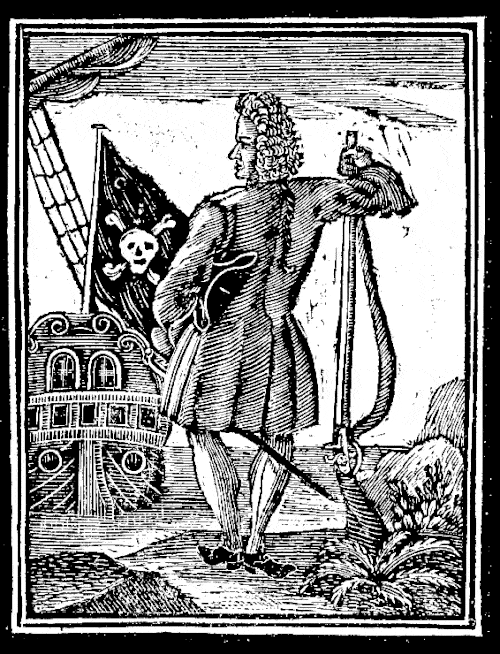
As for buried treasure? Hiding valuables temporarily certainly happened, but pirates generally wanted to spend their loot, trade it or divide it among the crew. A hidden trove of pirate treasure lends itself more to adventure fiction than historical records.
Where Did Pirates Operate?
Thus far, we’ve focused on pirates in the Caribbean who looted from maritime vessels. But pirates were active in other areas and other areas of commerce, too.
Pirates and Slavery
Pirates may not have been as violent rough-and-tumble as cultural depictions suggest. But they did sometimes participate in unsavory parts of the economies they worked in.
For example: Pirates sometimes attacked ships carrying the enslaved. In addition to plundering cargo (supplies, money, etc.), they may have recruited Black sailors or re-enslaved men into their crews. Research by historian Kenneth J. Kinkor suggests that 25 to 30% of pirate crews between 1715 and 1726 were Black.
Pirates weren’t necessarily abolitionists—they were interested primarily in profit and survival. Piracy remained entangled with the same slave economy that it preyed upon. Captured Africans were variously treated as potential crew members, victims alongside their captors, or commodities to be bartered and sold.
In 1717, Blackbeard, for example, seized the French ship La Concorde, which had a history as a slave ship. Some Africans on board apparently remained with the pirates while many others were returned to the French crew and ultimately sold into slavery in Martinique.
African pirates who became part of a crew likely received weapons, shares of the ship’s prizes, and positions of authority—all things unavailable to enslaved people on shore. But they also often faced different fates than their white crewmates: Colonial officials rarely gave Black pirates a right to trial if caught. If they weren’t executed, many were sold back into slavery.
Pirates in the American Revolution and War of 1812
The American Revolution and the War of 1812 each took place decades after the Golden Age of Piracy ended. Ships that played similar roles in those conflicts were more accurately described as privateers.
During the Revolution (when a Continental Navy was still in its infancy), privately owned American vessels received authorization to attack British shipping. The Continental Congress alone issued 1,697 Letters of Marque. Naval History and Heritage Command reports that there were more than 2,000 privately armed vessels that may have served during the Revolution, employing tens of thousands of men.
The system returned during the War of 1812, when Congress again authorized Letters of Marque that allowed private armed vessels to go against Britain’s ships. This time, it was the U.S. State Department that issued commissions.


While calling these men “pirates” might make for a better story—and their British targets sometimes regarded them that way—they were legally considered otherwise.
Of note, privateers also played an important role in US history between the Revolution and the War of 1812:
- In the 1790s (in response to Congress reneging on Revolutionary-era loan payments), France permitted privateer attacks on American vessels that were doing business with Britain. The resulting “Quasi-War” nearly led to violence between France and their former US allies.
- Pirates off North Africa’s coast regularly came into conflict with US vessels, seizing ships or demanding tribute. This led to two “Barbary Wars,” among the first armed conflicts in US history.
Pirates on Inland Rivers
Piracy doesn’t require an ocean. As American settlement and commerce expanded westward after the Revolution, enormous quantities of agricultural goods traveled down the Ohio and Mississippi Rivers. Farmers and merchants loaded flatboats with produce, livestock and other merchandise to be floated downstream. All that cargo moving through relatively isolated territory created an obvious opportunity for robbery.
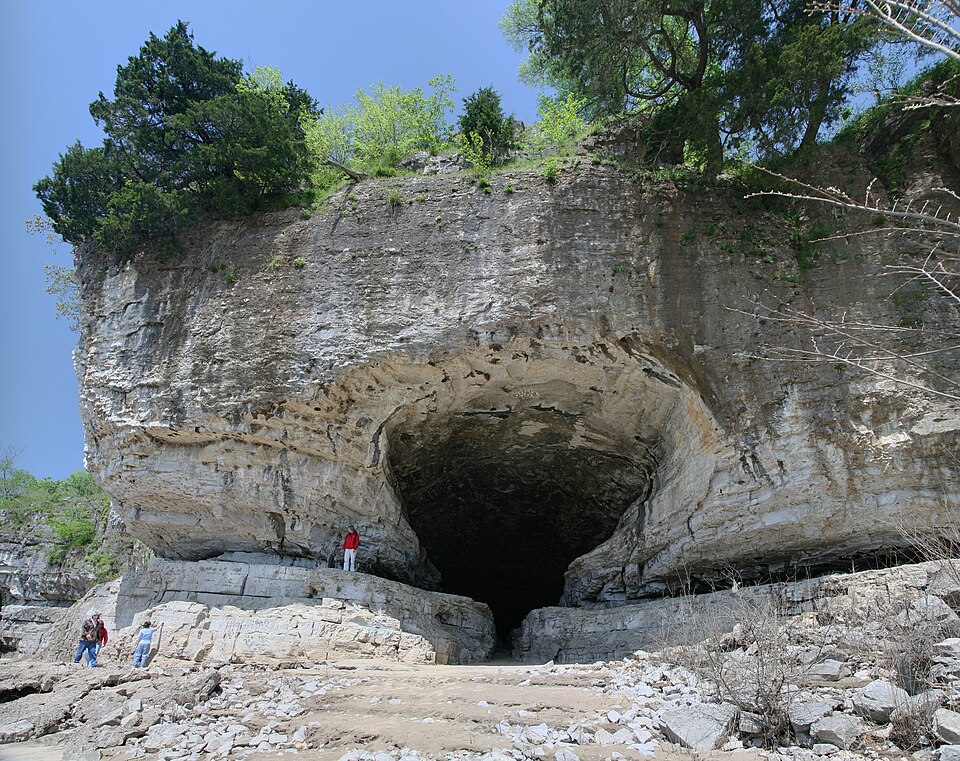
The most famous American river-pirate location is Cave-in-Rock on the Ohio River in southern Illinois. Its history, however, is a perfect example of why pirate stories need fact-checking: Later folklore turned the cave into an almost permanent headquarters for generations of murderous pirates. But according to the Illinois Department of Natural Resources, “there is no historical evidence Cave-in-Rock ever actually sheltered criminals beyond what might be considered brief stopovers.”
One documented river pirate was Samuel Mason, a Revolutionary War veteran-turned-outlaw. In the late 1790s, Mason and his associates preyed on travelers and commerce in the Ohio Valley. Accounts describe his men approaching boats under the pretense of assistance before forcing victims ashore to rob them.
River pirates didn’t need frigates or rows of cannon. They could operate from a small craft or from shore, using geography, isolation and deception to trap travelers. And their victims weren’t Spanish treasure fleets, but ordinary farmers, traders and boatmen.
Great Lakes Piracy
Yes, the Great Lakes had pirates too. Pirate stories didn’t entirely disappear when law enforcement tightened on the Atlantic. In fact, they may have become stranger.
Nineteenth-century Great Lakes commerce carried lumber, fish, livestock and manufactured goods through a huge maritime region where law enforcement could be thin. Thus, theft, smuggling, poaching and hijacking of boats all appeared on the lakes.
One of the most famous Great Lakes pirate is “Roaring Dan” Seavey, who operated on Lake Michigan around the turn of the 20th century. Seavey’s reputation eventually included almost every good pirate accusation available, from smuggling and poaching to stealing cargo and trafficking.
In June 1908, Seavey and his associates took the schooner Nellie Johnson from Grand Haven, Mich., and attempted to dispose of its cargo of cedar posts. Federal authorities pursued him; contemporary newspapers transformed the chase into a dramatic pirate story, including reports that the federal cutter Tuscarora fired a cannon to force Seavey to surrender. However, the Tuscarora’s official log doesn’t support that detail, instead reporting that Seavey surrendered without a cinematic cannon shot.
Which, frankly, makes him a fitting final pirate for this article. Even in 1908, the line between documented piracy and a really good pirate tale was already becoming difficult to see.
The Pirate History We Inherited
The “true” history of pirates is not one of rum, parrots and treasure maps. It’s a contradictory history of maritime trade, war, colonialism, slavery, labor and crime all tangled together.
Some pirates were former privateers. And some privateers behaved suspiciously like pirates. Sailors could join crews willingly while others were captured or coerced. Pirates invented rules that gave ordinary sailors an unusual amount of power—while participating in an Atlantic economy that enslaved millions of people.
Governments condemned piracy while repeatedly turning private maritime violence against their enemies. River pirates robbed crews hundreds of miles from salt water, and a Lake Michigan mariner could still be branded a pirate in the 20th century.
The parrots and treasure maps came later. After all, real pirates didn’t need them—their world was already complicated enough.
Websites and Resources for Researching Pirates
- Library of Congress: the Map Collections contains maps relevant to wars in which privateers were employed.
- Library of Congress: the Capital and the Bay: Narratives of Washington and the Chesapeake Bay Region, 1600 to 1925 comprises 139 books selected from the LOC’s collections. The official letters of Alexander Spotswood (Lieutenant-Governor of the colony of Virginia) contain references to pirates, including Blackbeard.
- Library of Congress: Exploring the Early Americas
- Library of Congress: the Piracy Trials is a digitized collection of the Law Library of Congress containing documents of pre-1923 piracy trials
- The Mariners’ Museum and Park (Newport News, Virginia)
- Order of the Descendants of Pirates and Privateers
- Queen Anne’s Revenge Project
- St. Augustine Pirate & Treasure Museum
- Whydah Pirate Museum
A version of this article was published online in September 2026.
Related Reads



Author

Katharine Korte Andrew MS/LIS is a digital editor for Family Tree Magazine and professional genealogist.