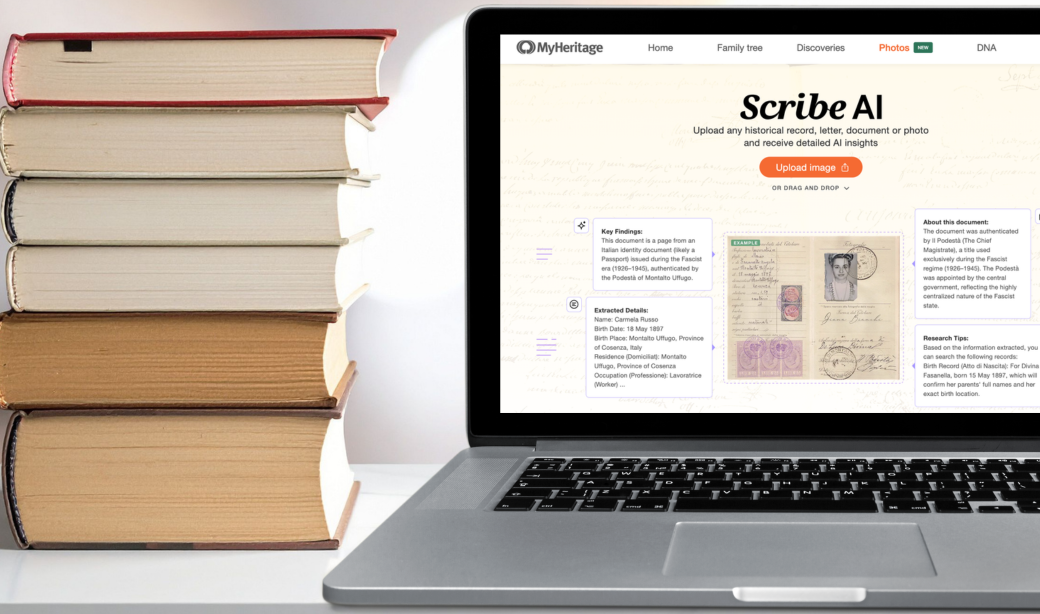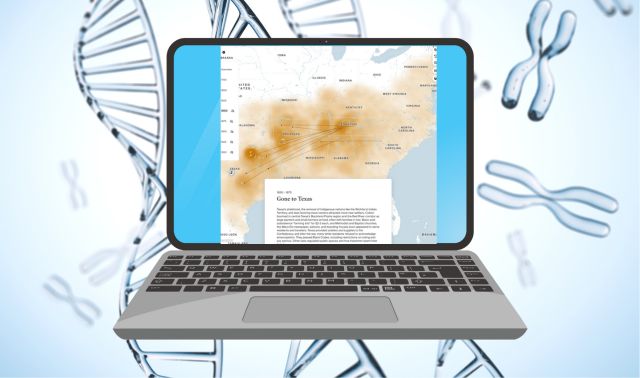

Leading genealogy website MyHeritage features Theory of Family Relativity, a tool that revolutionizes how you explore your DNA matches. How does it work? It compares your genetic relationships to your matches to information about your common ancestors from millions of interconnected family trees and billions of historical records. All these clues are threaded together in a proposed compiled family tree that suggests how you might be related to your DNA matches.
 MyHeritage
Search Billions of Historical Records
Start with a name.

Above is an example from my own theories. You can see:
- The estimated relationship (here I would also see links to any additional theories the system might have, if there were any; I’ve seen up to five theories for my matches);
- The identities of the different trees that have contributed to this theory;
- The complete proposed path between you and your match, showing the nature of each connection so you can verify it yourself. Here, the green icon means it’s a Smart Match (match between trees); you might also see a brown icon for Record Matches, which point to historical documents. You’ll see a percentage that expresses the site’s confidence in the accuracy of the match.
On your own tree, you might see a theory to explain a match that “begin(s) in the family tree of the first user, traverse(s) through a series of matching trees into a census record, continue(s) to a household relative, who then matches into another tree, until the path completes with the family tree of the second user.”
When more than one theory is available, that means that MyHeritage has identified multiple theories as to how you are related to a DNA match.

As shown here, you’ll find the Theory of Family Relativity under the DNA dropdown menu > DNA Matches.
MyHeritage calls this tool “a game-changer in the world of genetic genealogy.” Among the billions of tree profiles included in this enormous hinting system are millions of MyHeritage trees, Geni’s World Family Tree, and the unified FamilySearch Family Tree (both of the latter are updated daily on MyHeritage).
“This combination results in the most comprehensive family tree traversal available today,” the company states. “Not only does genealogy illuminate DNA connections, but DNA also helps separate fact from fiction in the genealogy and shows which tree and record connections appear to be correct.”
Related Reads


A version of this article was posted online in February 2019. Last updated: December 2025