
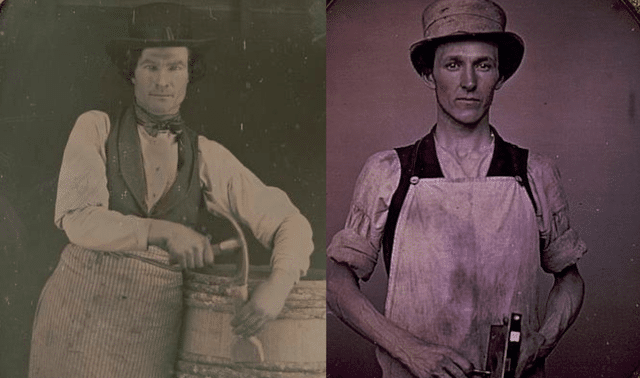
Happy Labor Day! It’s a day that honors work so why not take a trip into the past to find pictures of your laboring ancestors. The first Labor Day was held Sept. 5, 1882 in New York City, sponsored by the Central Labor Union. Some of my favorite images on the Library of Congress website are the pictures that show individuals in their work clothes posed with tools. Each one is like a time capsule.
How to Find Occupational Portraits
- Go to the Library of Congress website
- Click on the link for “Prints and Photographs.”
- Enter in the search box “occupational portraits” or the specific occupation of your ancestor. You can find your ancestor’s occupation on census records, professional licenses or in family papers. It may be that your family tells stories about work history.
- Start looking.
I followed these tips and found three daguerreotypes. Those are shiny reflective images first introduced to the United States in 1839.
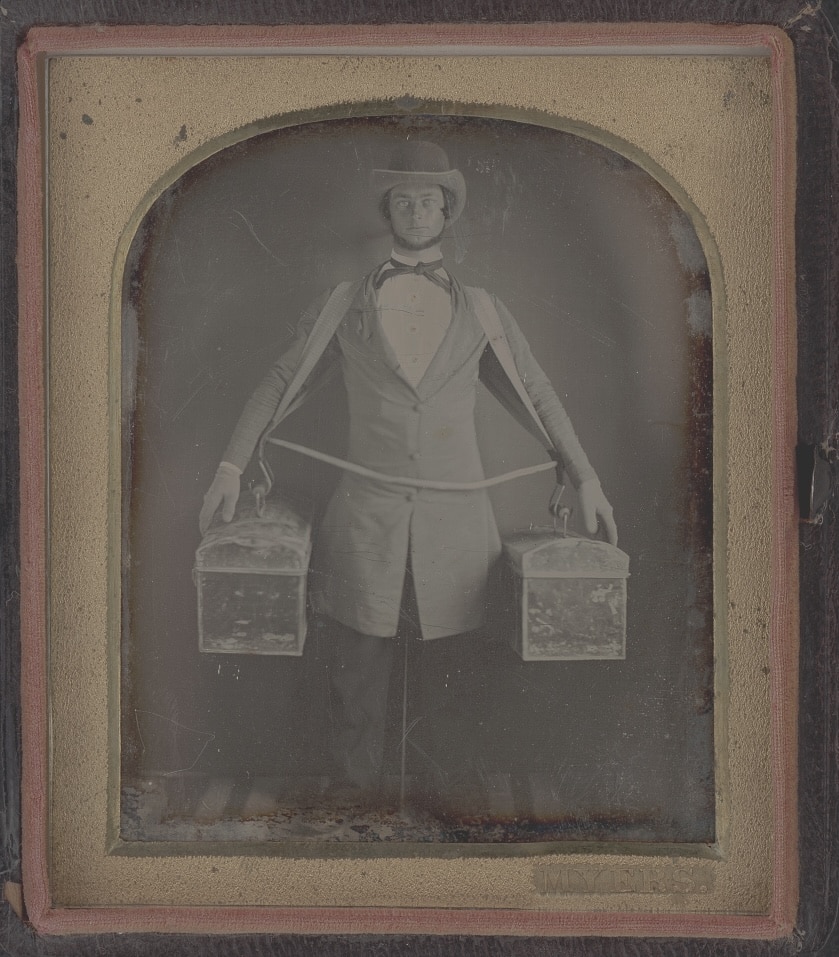
This peddler carried his wares in two boxes balanced over his shoulders. It was taken circa 1840–1860.
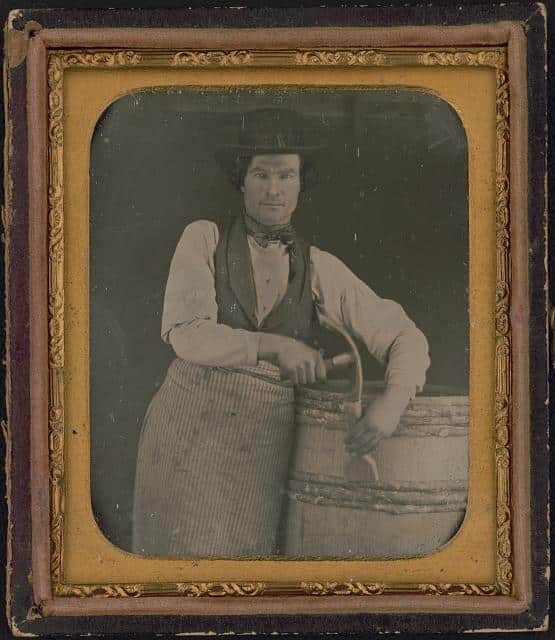
If you have any barrel making ancestors then you’ll love this picture of a cooper with a barrel and his tools in hand, circa 1850.
Another occupational portrait in the collection of the Library of Congress is of a latch maker:
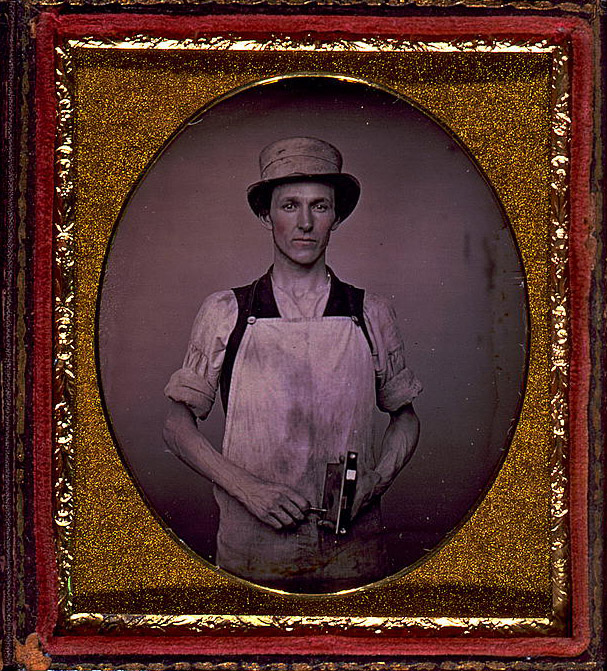
It’s a gorgeous daguerreotype taken between the late 1840s and 1860. The key dating clues in this image are the style of the mat and the case that holds the image (not visible here).
Did you notice that this man is wearing a vest? He likely wore a jacket on his way home. Men generally dressed in shirts, vests and jackets. He’s rolled up the sleeves on his collarless work shirt. I’ve even seen photos of farmers plowing fields in full dress with a hat on their heads.

He’s posed with one of his lock mechanisms. Bringing an object into a photo helps the viewer identify his trade. Without the lock, it would be a mystery work picture. He’s even demonstrating how the lock works with the key.

As soon as I enlarged the digital image, I realized that the daguerreotypist colored his cheeks and slightly tinted his lips for a more realistic look.
While his hair isn’t visible in this picture, that’s an interesting clue. Many men in the 1850s wore their hair longer than this man does. Perhaps it’s short so that it doesn’t interfere with his work by getting in his eyes?
The hat looks like it’s a heavy fabric rather than felt. It’s seen some use, fraying at the edges.
Related Reads


Versions of this article were published online in September 2011 and September 2018. Last updated: August 2026